Holistic Clinic “Roots”
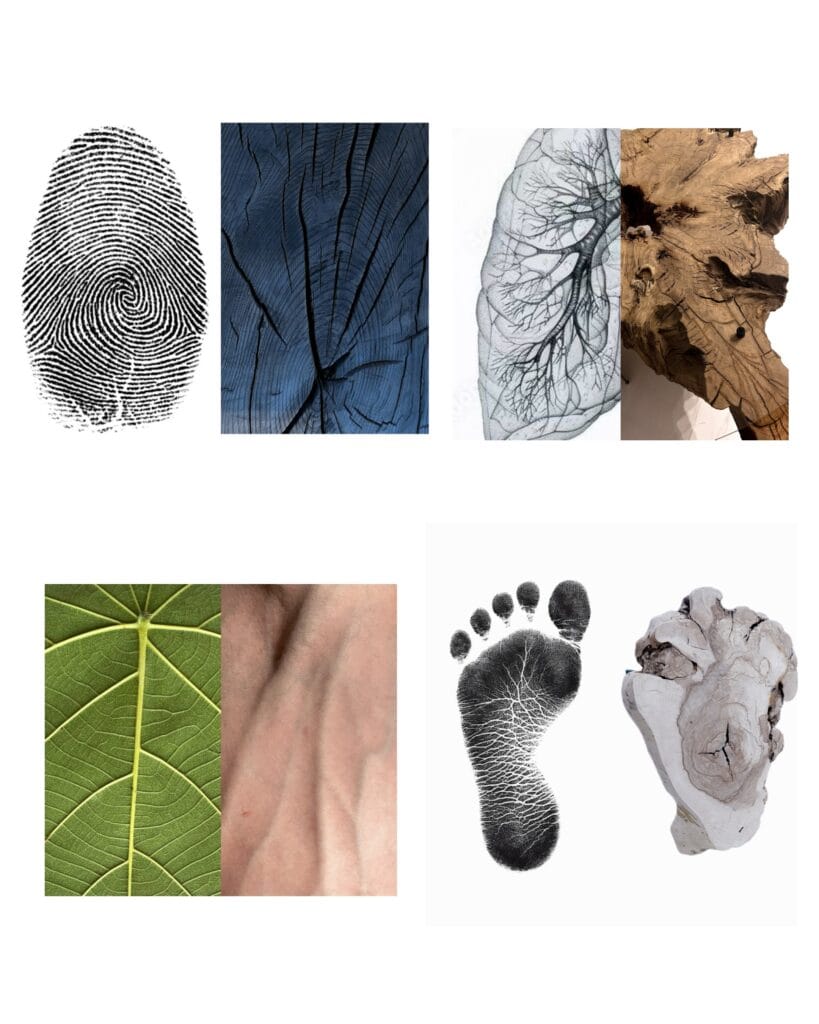
…Our nervous system is evolutionarily programmed to recognize natural structures – a network of branches, leaf veins, tree grooves – as our own. Therefore, their presence in the environment instantly reduces tension and sends a signal of safety…
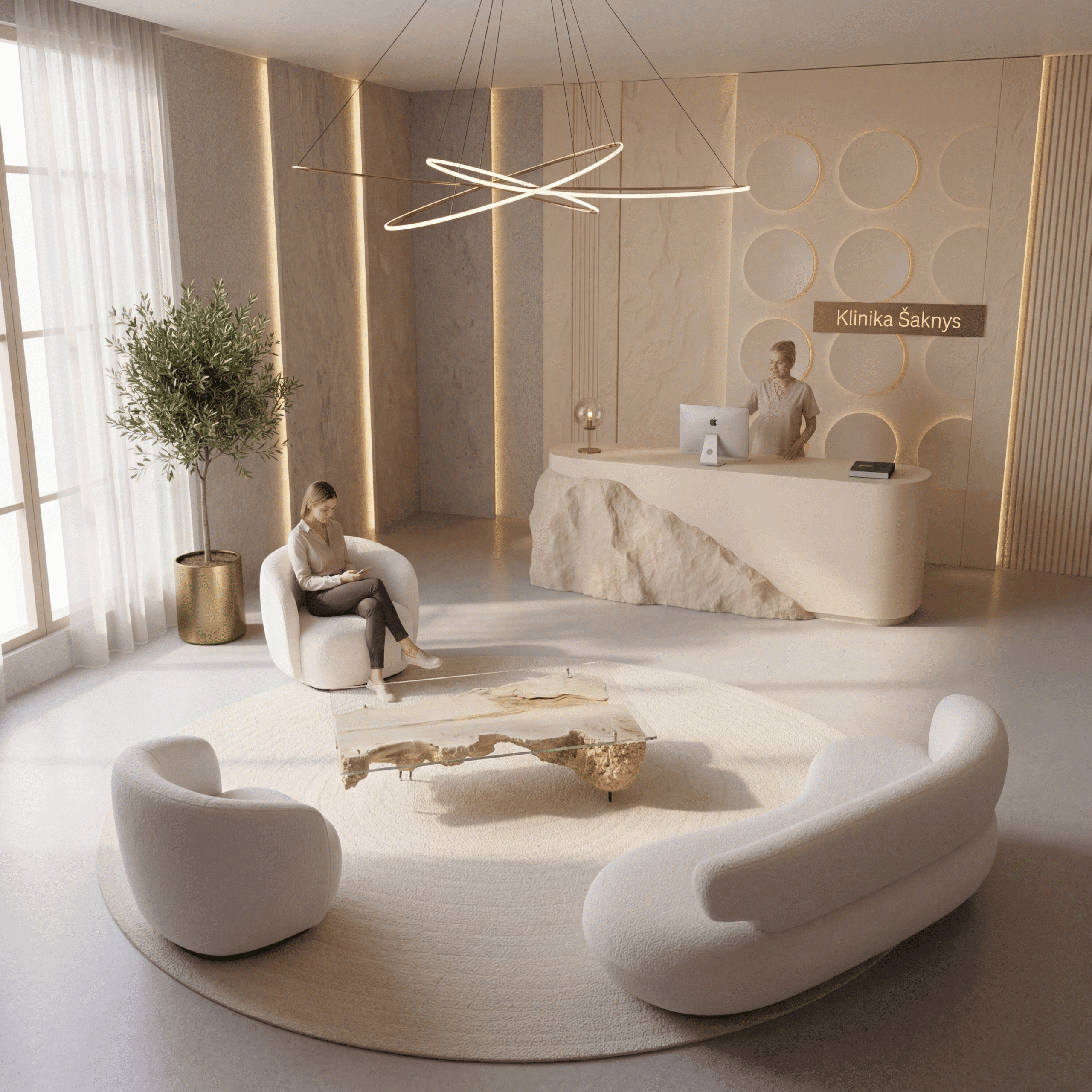
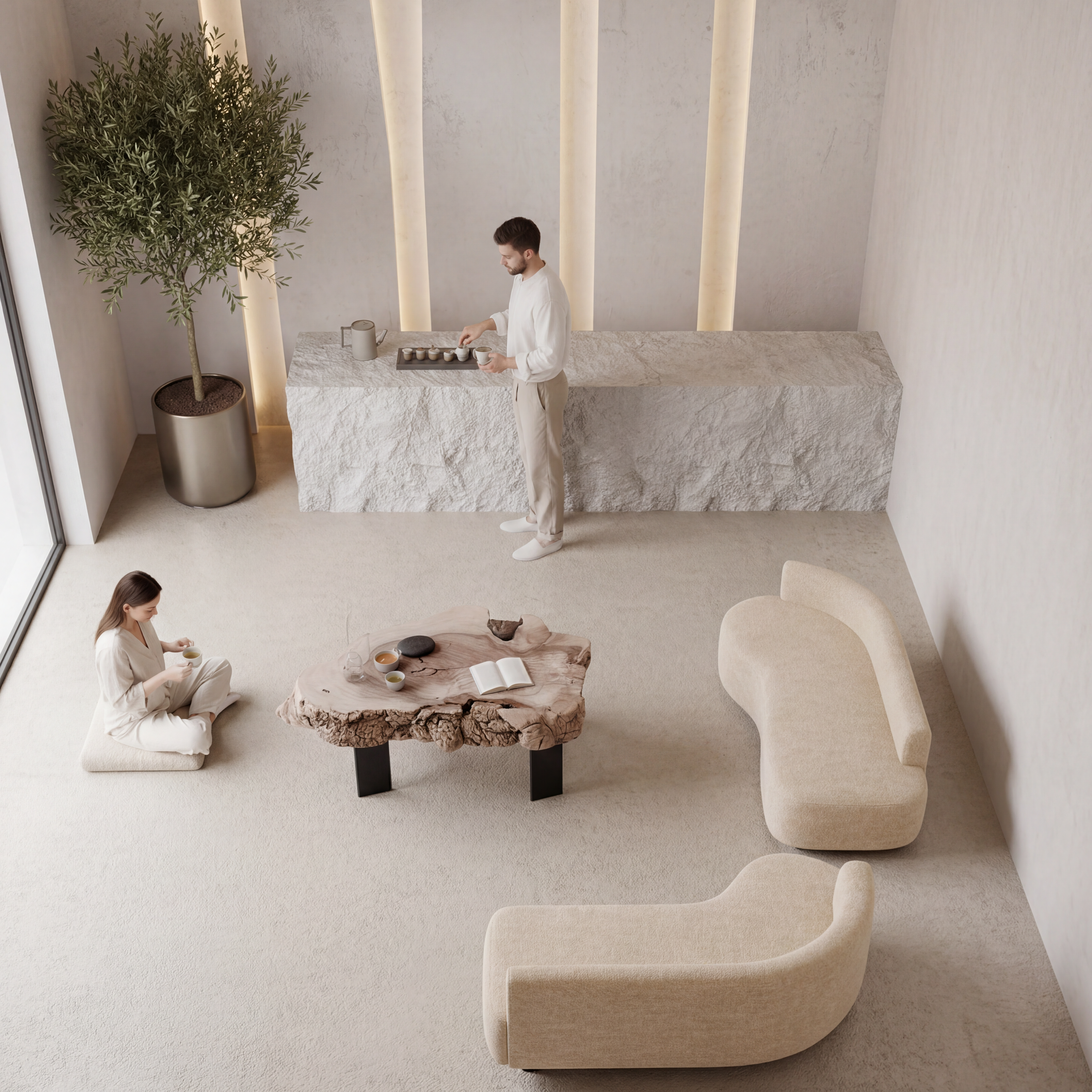
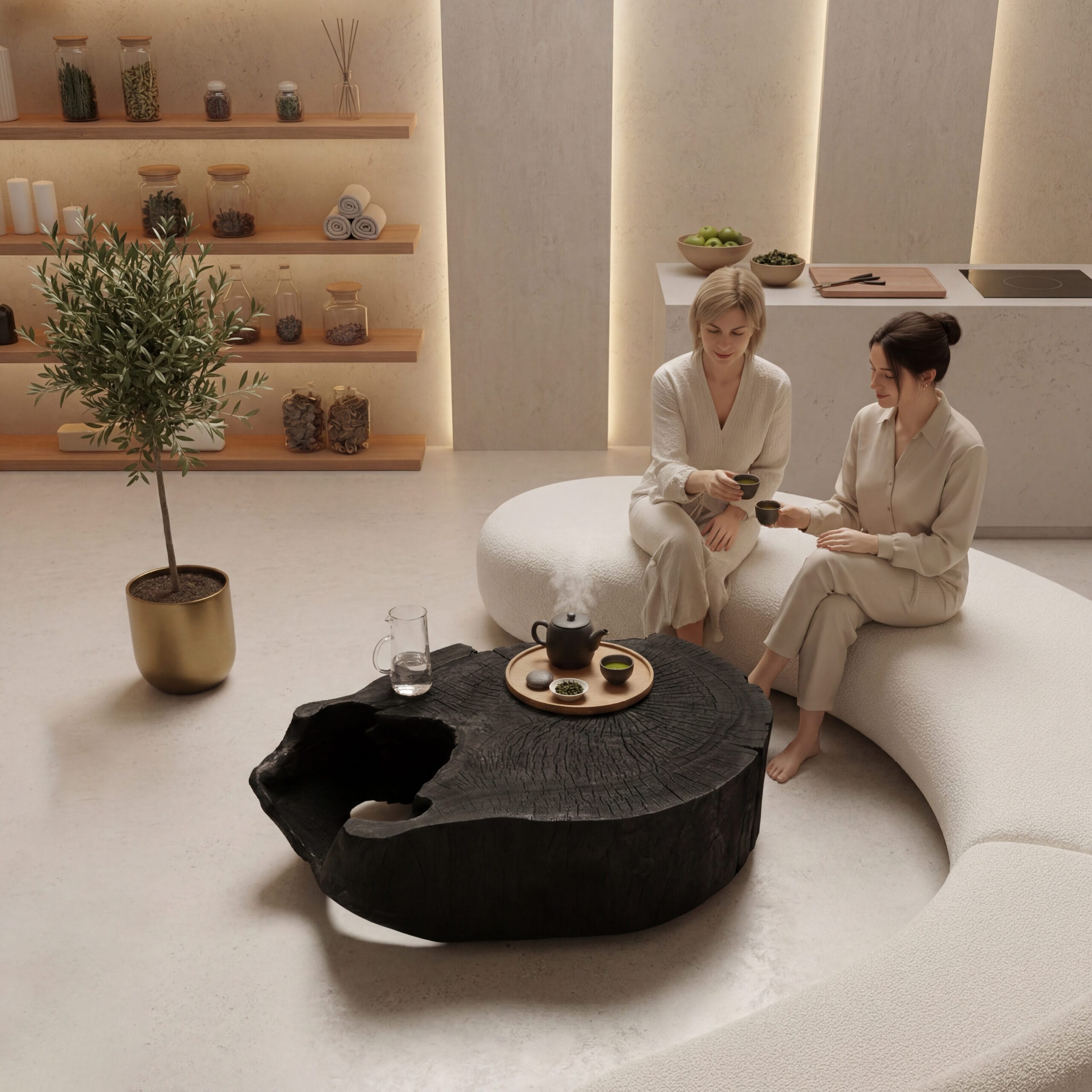
The goal was to create a holistic clinic environment that would greet a person not with coldness, but with the forms of nature. We wanted to show that healing does not begin with a conversation in the office, but from the moment you step through the door. The environment here is not a decoration – it is part of what heals.
Most healing spaces still resemble laboratories: white walls, plastic, perfectly smooth surfaces. This is safe according to the norms, but completely alien to a person. A person comes to such a clinic already tense, and the sterile environment only maintains an elevated level of cortisol. The body remains ready to defend itself, not to open up, which makes the healing process more difficult.
We designed the clinic environment not only for beauty – it is based on neuroaesthetics and biophilia, which explain how natural forms help us heal.
Fractals. Patterns we recognize
Nature has found the most efficient way to fit giant networks into a small space. This is called fractals – when the same pattern is repeated on an ever smaller scale. Nature’s patterns are ingrained in our blood, because we ourselves are made of them:
Lungs: Bronchi branch out more and more finely – this is a fractal.
Blood circulation: From the largest veins to the smallest capillaries – the same branching pattern.
Brain: One neuron looks like a small tree with thousands of branches.
Scientists Roger Ulrich and Richard Taylor have proven that visual contact with nature’s fractals instantly switches the brain to an alpha wave state and reduces stress levels by up to 60%. Richard Taylor from the University of Oregon’s theory, called “Fractal Fluency”, confirms that our eyes and brains are designed to scan precisely such shapes. This is not just science – it is our inner language.
When the environment lacks natural forms, the brain experiences “starvation.” We return to what is naturally close. After all, there are no perfectly straight lines in nature. Our eyes and senses have become accustomed to seeing a forest, the bends of a river, or the branches of a tree over thousands of years.
The environment as a whole organism
Clinic “Śaknys” is not just a list of services – it is a living whole. We are guided by the principle that the clinic’s services, people and environment should form a single whole, like in nature. Everything is connected here:
Services: Psychotherapy, yoga, breathing practices, massages and art therapy do not work as separate units, but as complements each other.
Environment: This is not design, but a direct connection with how our senses work. When you enter, you see the same patterns that are inside you: in the lungs, bloodstream, neural networks.
A person: here he no longer feels like a set of “fixed” organs or thoughts. He leaves as a whole.
The rebirth of the ‘outcasts’
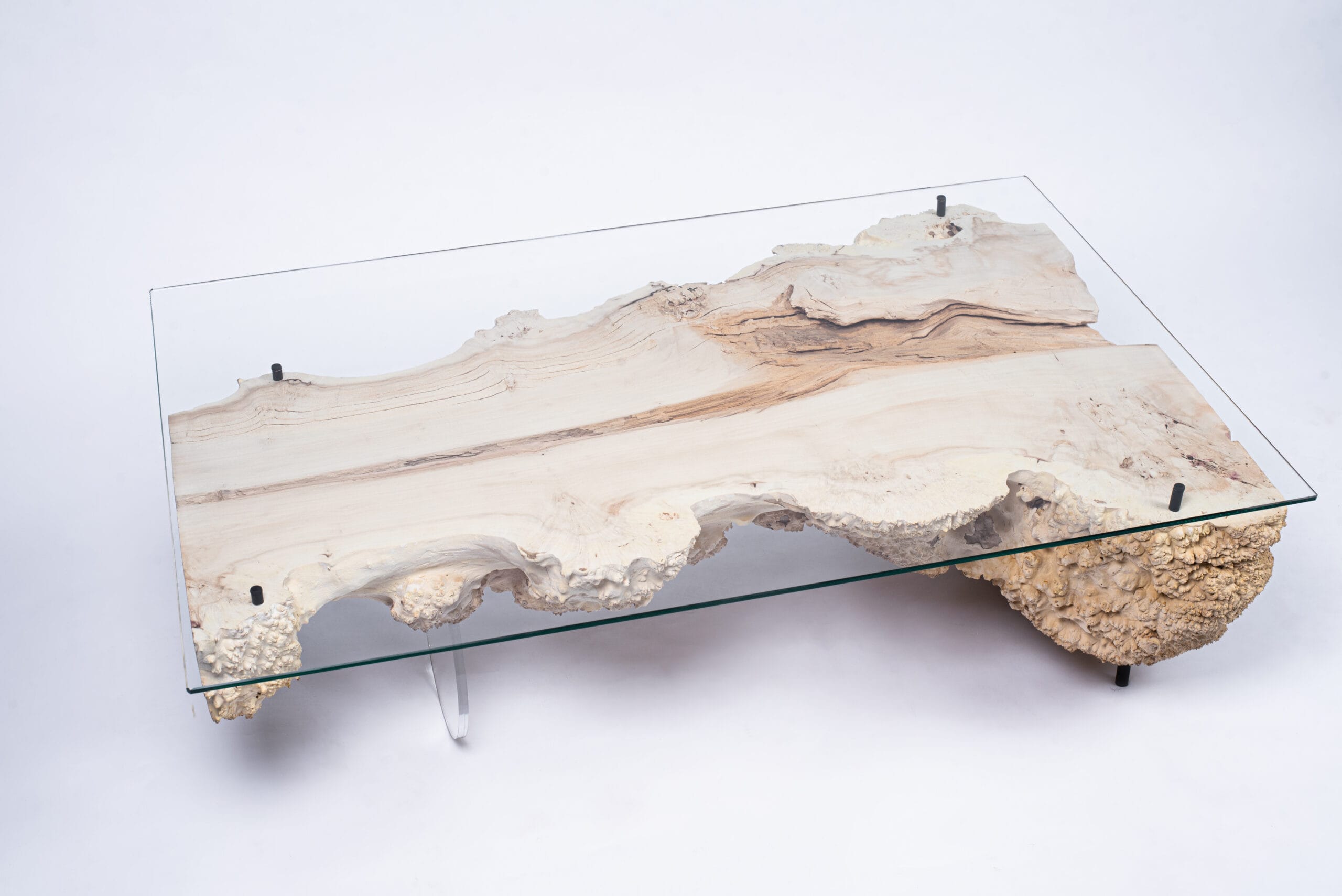
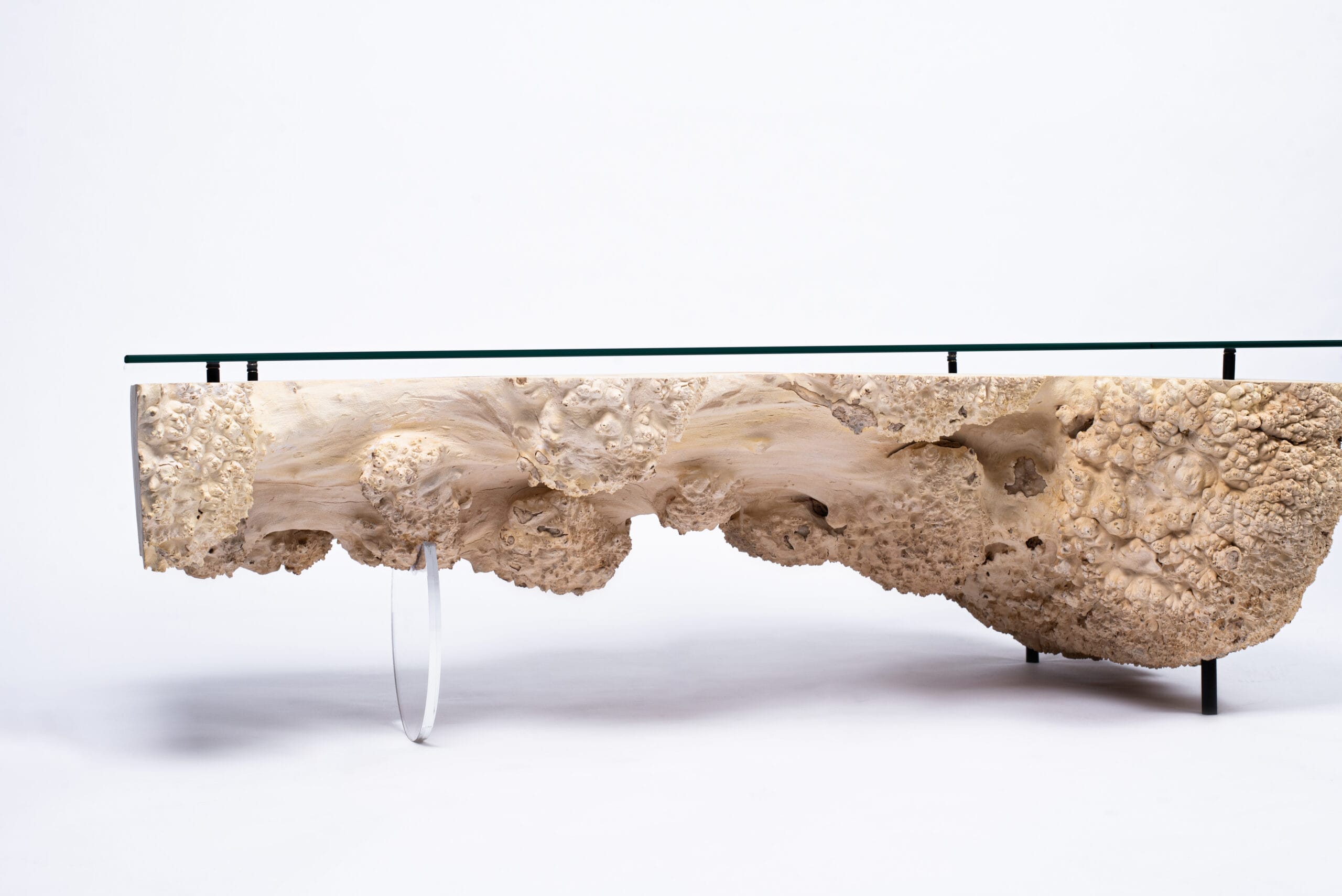
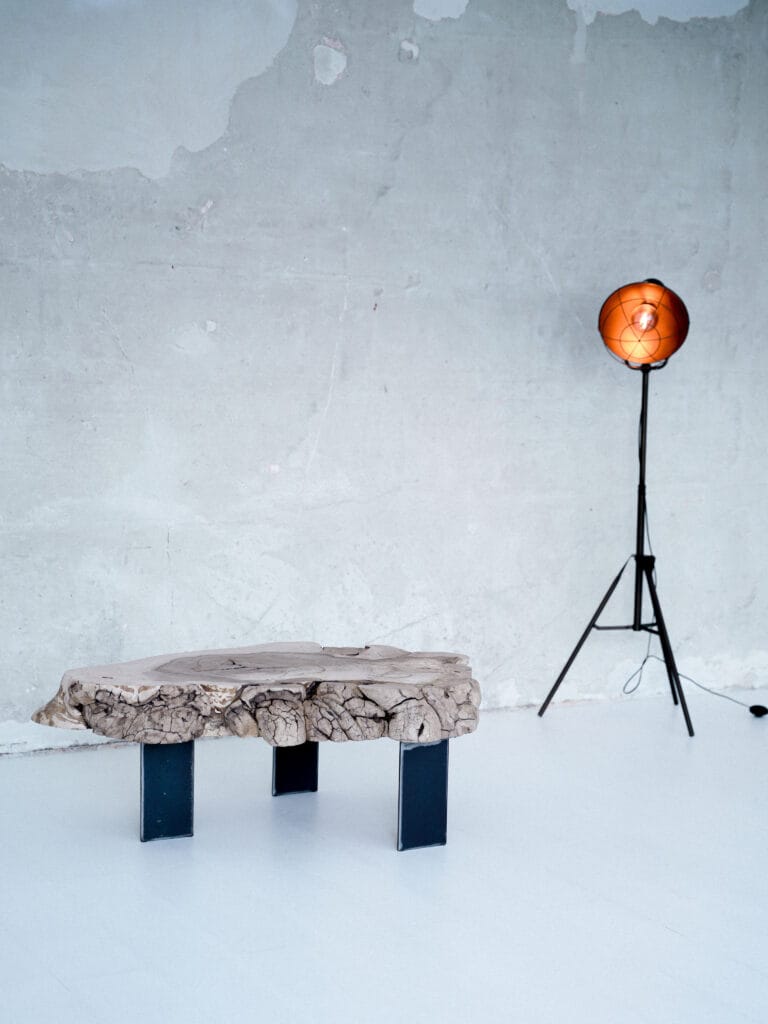
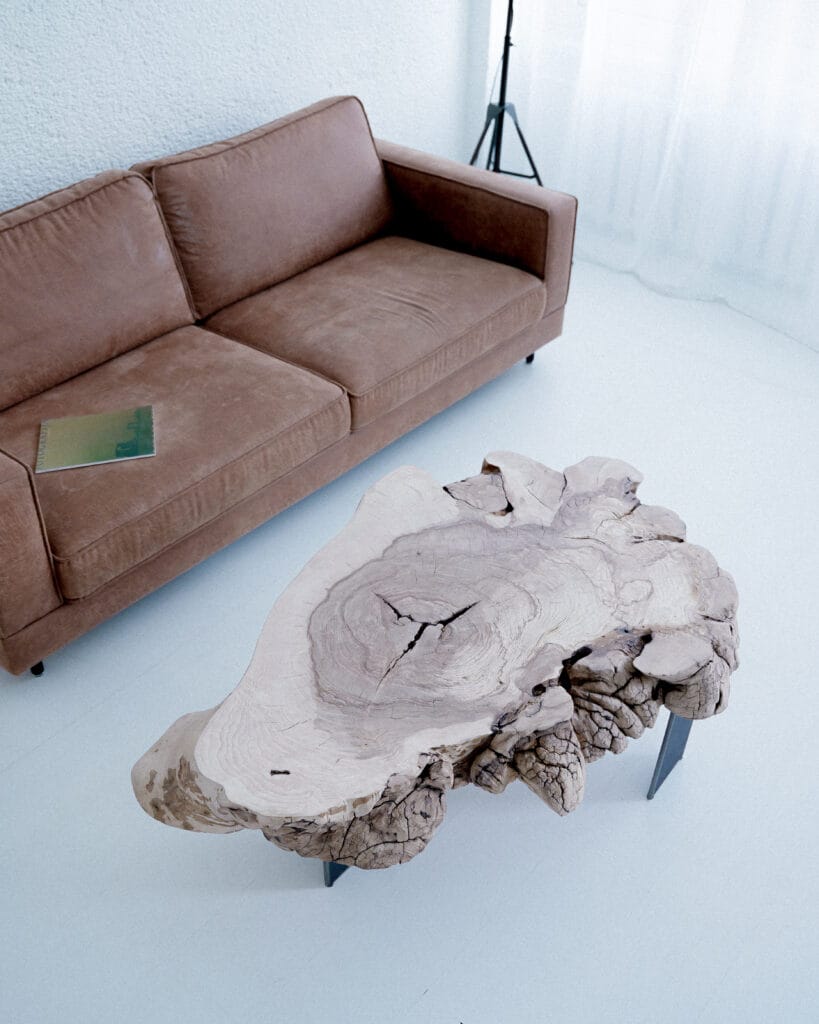
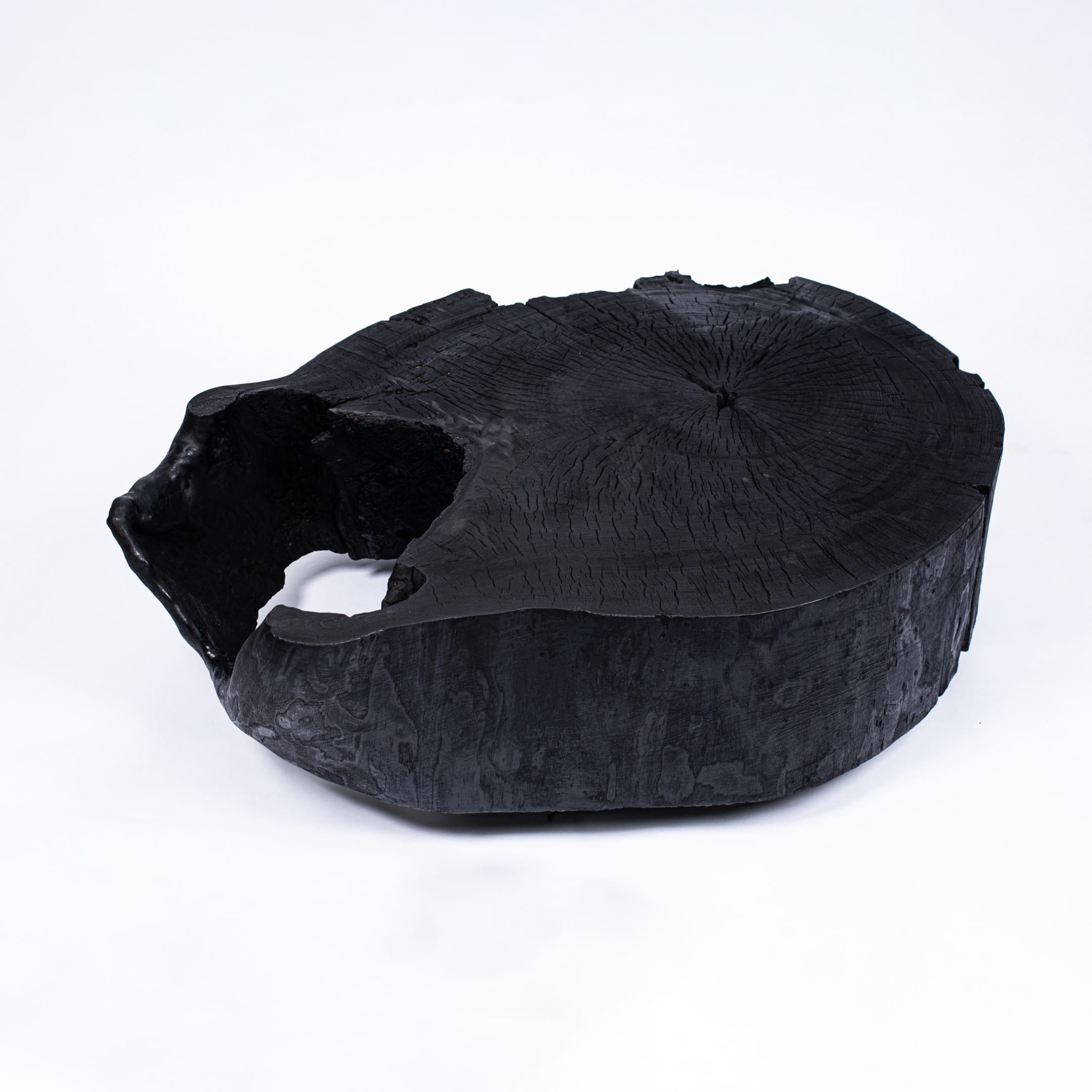
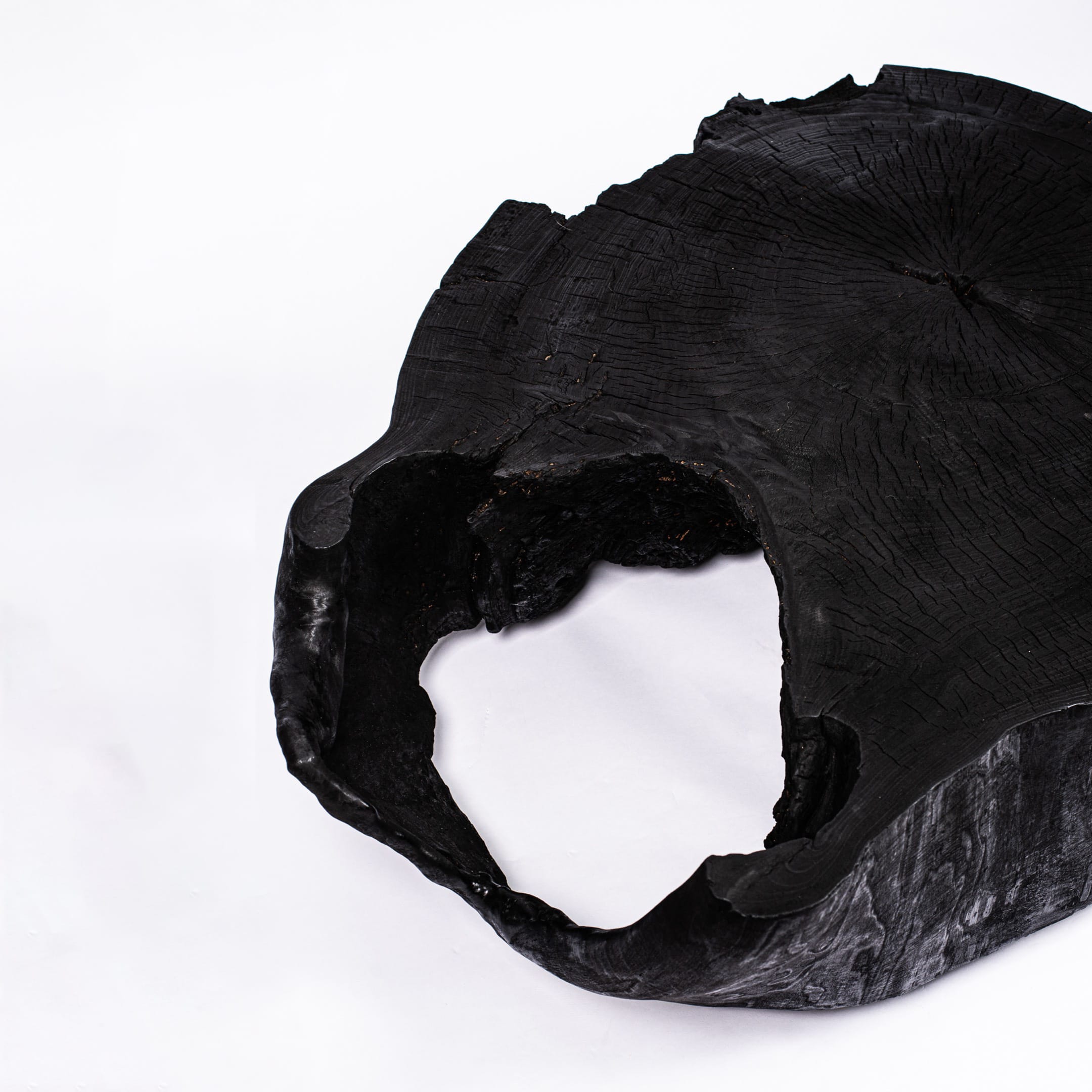
We fill this space with tables made from wood that was destined for biofuel. It is wood with all its scars, growth defects and irregularities – what the industry calls “defects”. Just as a person who comes to the clinic may feel “broken” or “imperfect”, the material we use also has its own “traumas”.
But it is through those fractures, cracks, and grooves that the greatest healing power is revealed. It is reincarnation: what should have been burned becomes the main object that one wants to touch and explore. Looking at a natural surface, one sees not only form, but also time, growth, change. The brain says, “This is familiar to me. This is safe.”
An environment that promotes healing
In this clinic, the tables are not just interior details – they themselves participate in the healing process. When we enter the clinic and see a table with a natural wood split or uneven edge, our insides instantly calm down. Our brains don’t have to “decode” foreign, sharp or artificial shapes, so they “breathe”.
The grooves or bumps in a tree send a message to the part of our brain responsible for safety: “Everything is fine here, there is no danger.” We often associate plastic or ideal smoothness with surgery, pain, or control, so the body automatically wants to defend itself. The biophilia hypothesis (biologist Edward O. Wilson) states that we instinctively look for signs of life. When they are absent, we feel threatened. When they are present, the body goes into healing mode.
When a person touches a wooden table that has a hole or a chip, they see themselves. The tree has survived storms, fractures, but has become even more beautiful and valuable. This gives us permission to be “imperfect” ourselves, to accept ourselves, with our scars and experiences.
The Roots Clinic creates a space where the environment speaks to your body without words. In our clinic, these products become a place of calm. A person does not sit down on a piece of furniture – they sit down on a form that is familiar to their nervous system. The body itself, without any effort, switches from the “fight or flight” mode to a state of rest.
From manifesto to reality
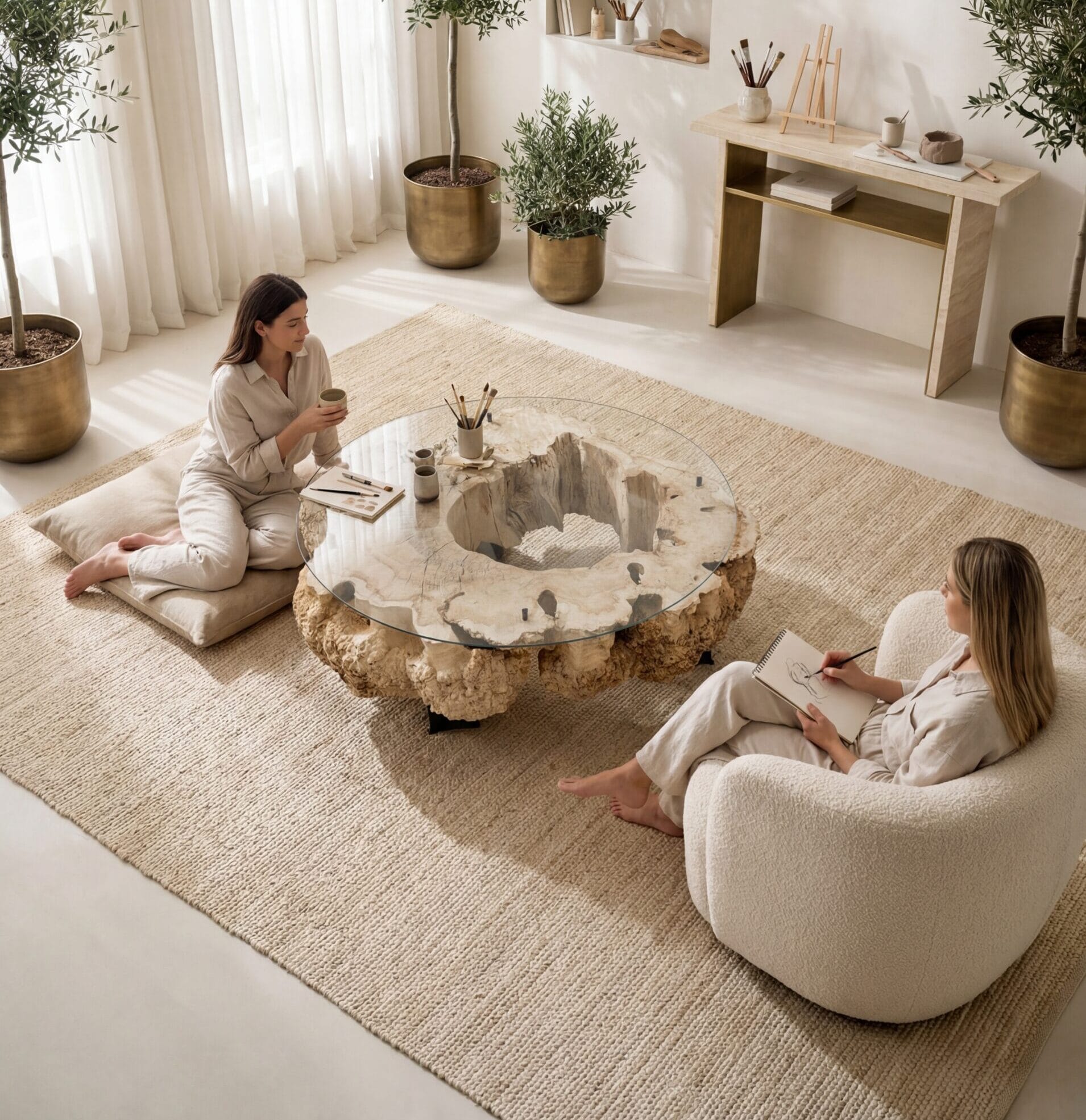
This project is proof that design has a healing essence. The peace and healing that a person feels when touching and seeing wooden surfaces reaches their cells through impulses sent by the nervous system. This is confirmed by the science of epigenetics, which proves that a calm and safe environment directly changes the state of our cells, and a calm body naturally changes its relationship with itself and the world.
The foundation of our creativity is the principle of the mycelium (mycelium) network: cooperation, resource sharing, connection. This virtual clinic is our manifesto – a space created to visually and scientifically demonstrate how our products work not only aesthetically, but also functionally, providing benefits to human well-being and health.
We don’t just look at the patterns in the wood – we look at what we ourselves are made of…