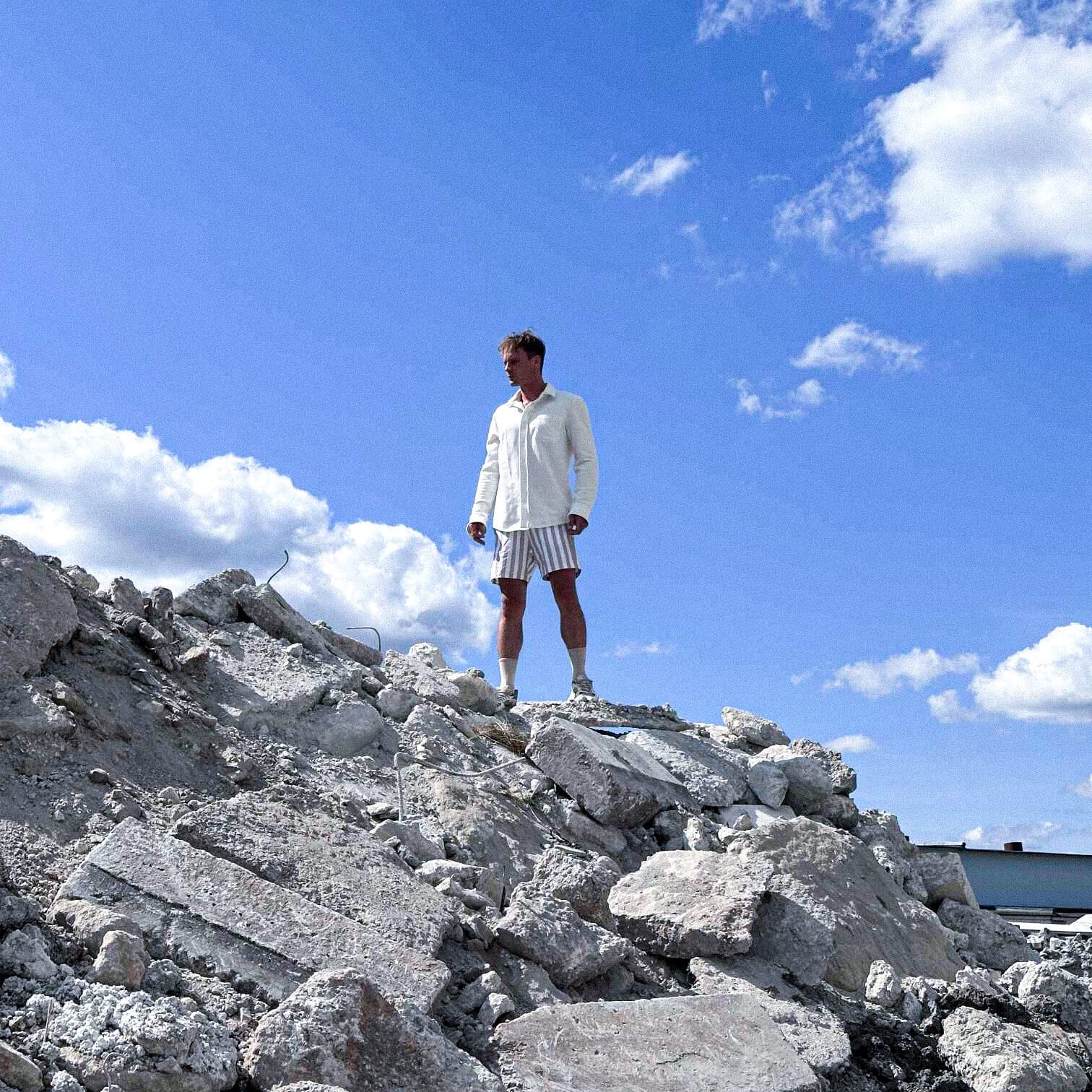
PROJECT GOAL AND VISION: CITY DNA
The focus of this project was not simply to create a “beautiful café interior”. The goal was to form a living, functioning space that would physically broadcast the materiality of Kaunas city, its industrial heritage and street culture. It is an attempt to tell what is real through real materials, real objects and real stories. We consciously place modernity next to the roughness of the street, and through this contrast with real organic surfaces we reveal an aesthetic in which one side complements the other, creating new value.
The vision was clear: the space must speak the language of the city. It must be composed of what has existed in the fabric of Kaunas for decades: industrial residues, by-products, scrap materials, excess forms and unused materials. This is where urban graphics and street expression merge.
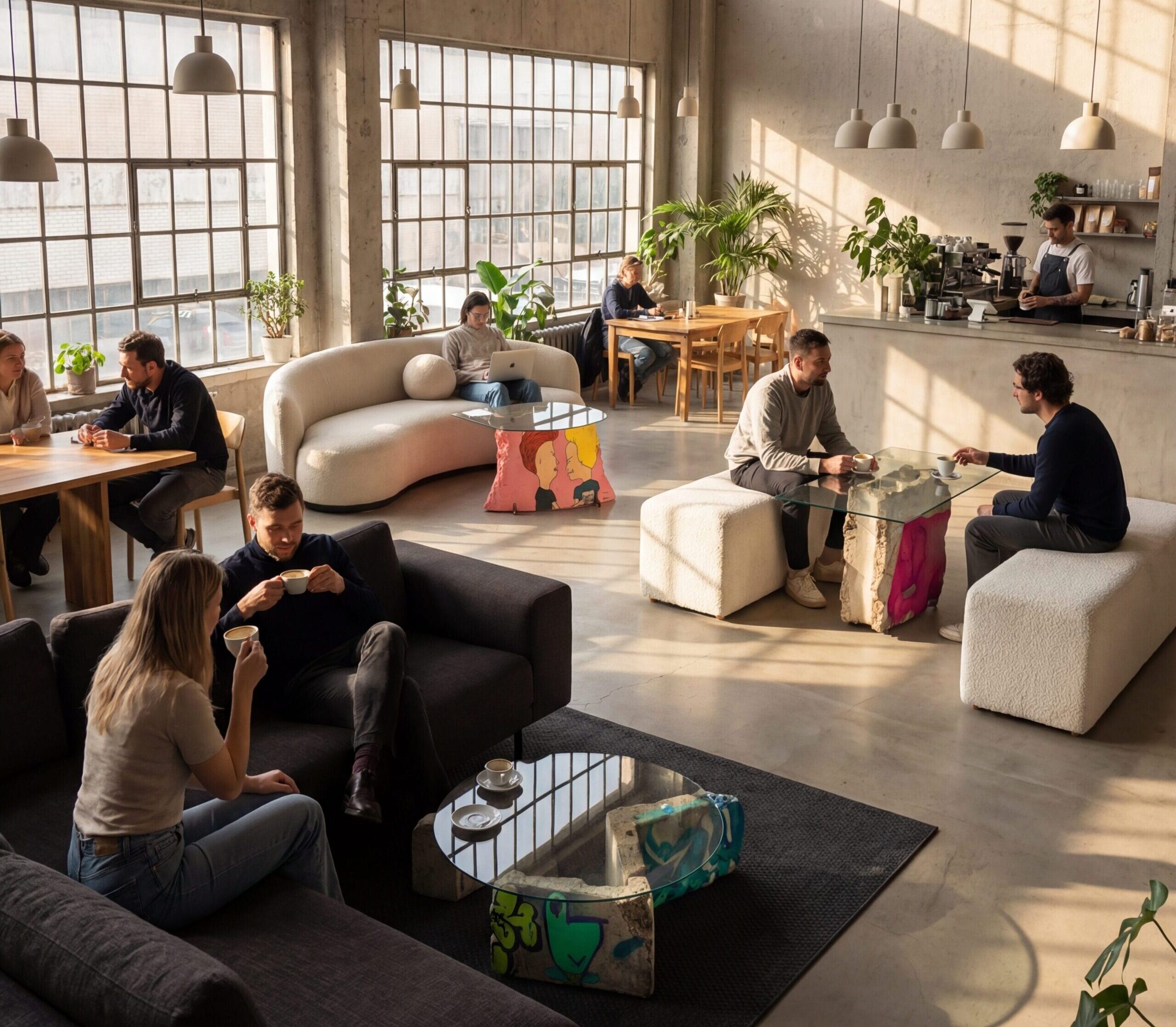
This project brought back to life:
• Concrete by-products of Kaunas reinforced concrete company.
• Discarded industrial glass from local factories.
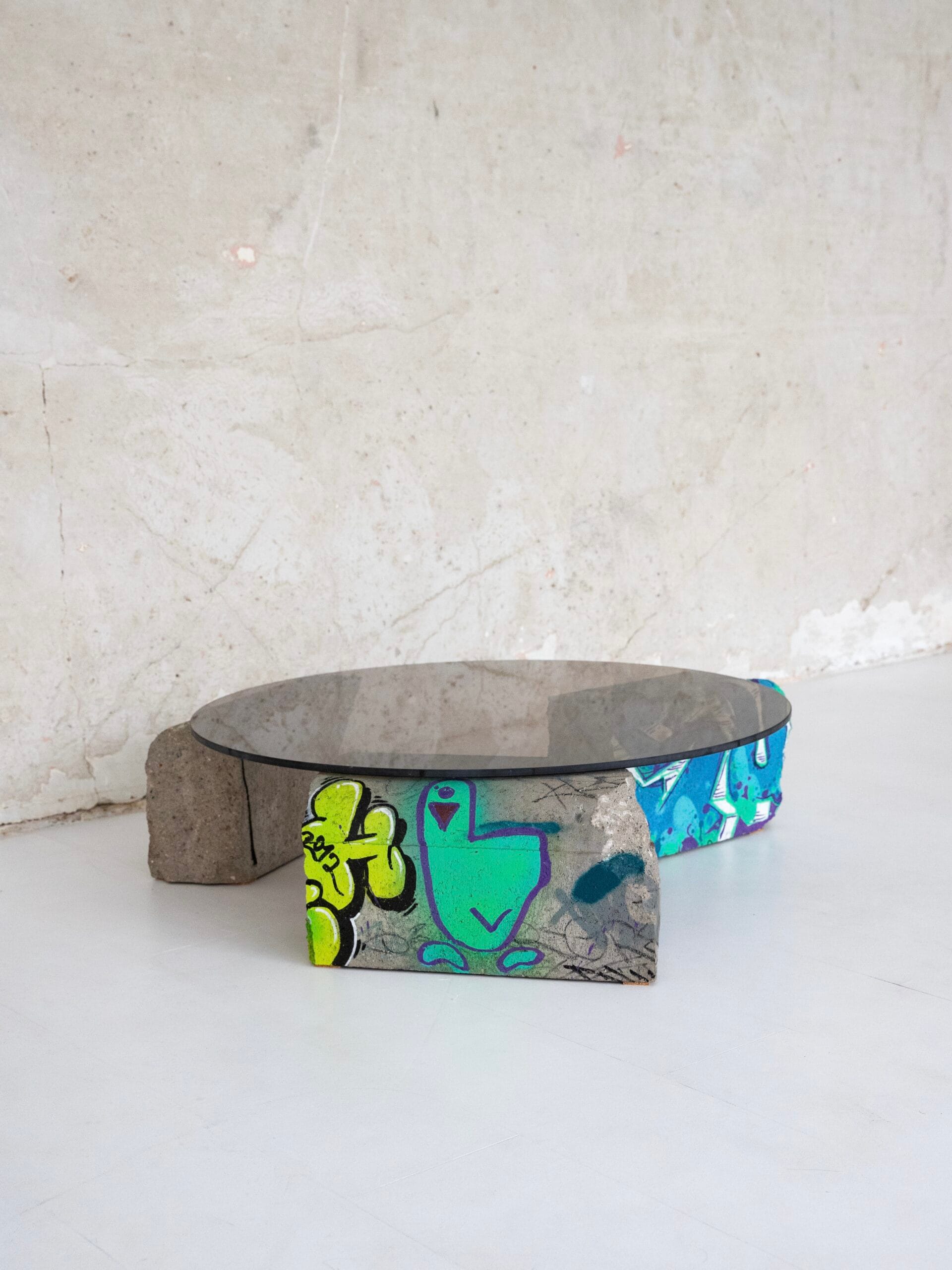
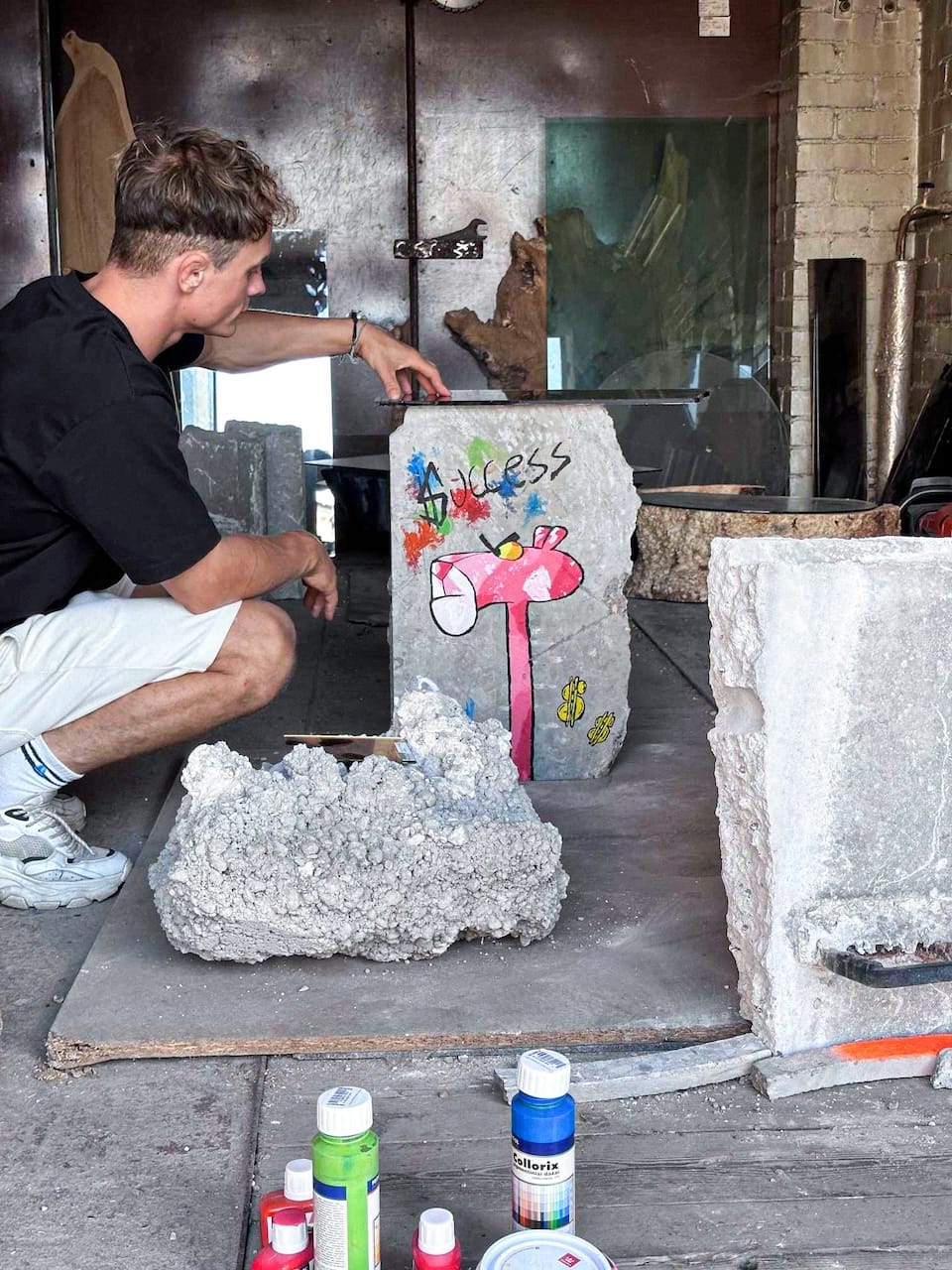
• Authentic elements of the city: from real fragments of Kaunas street graffiti to provocative 90s animation-style drawings reminiscent of the iconic “Beavis and Butcher” graphic.
This is not decor
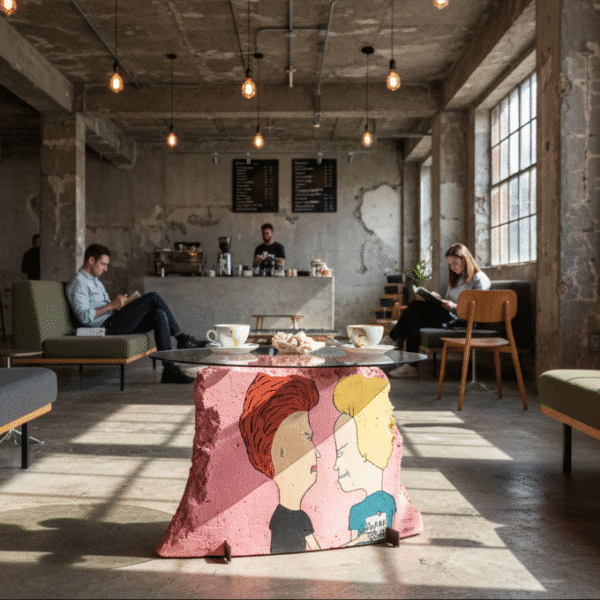
These are true expressions of the city, with their own stories about the city, the era, love, and people.
Each object in this space was born not as a separate piece of furniture, but as a fragment of the city, transferred to the interior.
We were not just looking for aesthetic value.
.
We created a model that expands the visitor’s experience, allowing them to feel the origin of the materials and understand how they were transformed into a new form and function.
It is a deep emotional connection – it is a “map” of the city that both locals and foreigners read by touching objects.
This is not a one-off design solution.
It is a working model that shows how local stories are transformed into real infrastructure for experience.
INFRASTRUCTURE, NOT DECOR
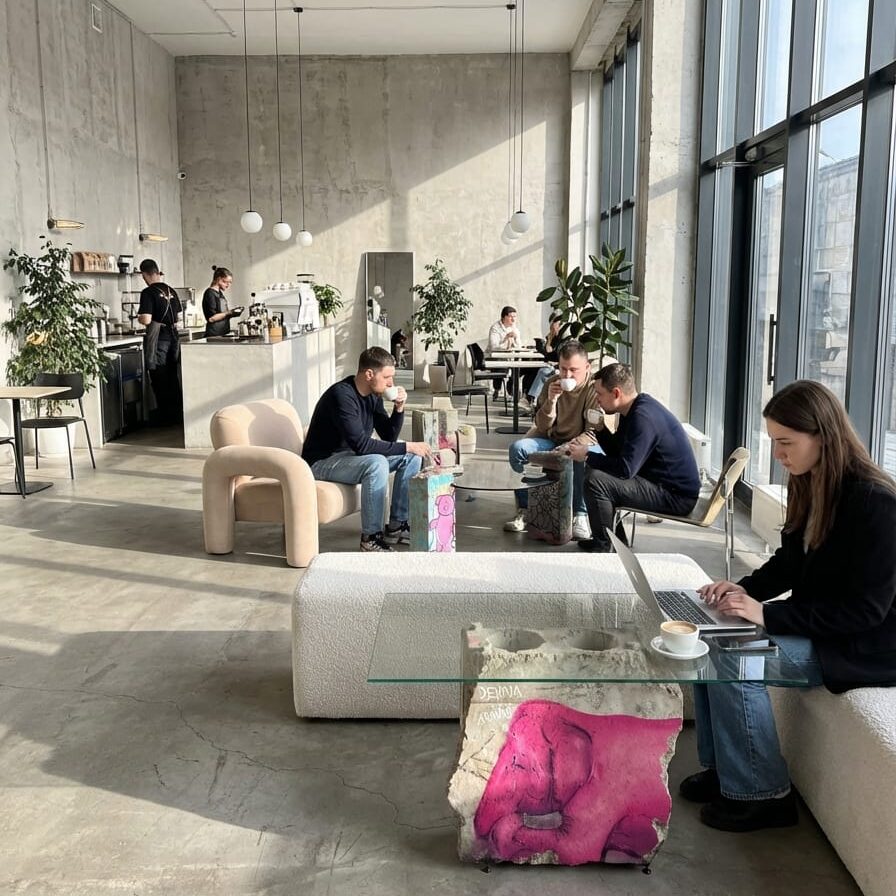
This café functions as a mechanism for experience.
.
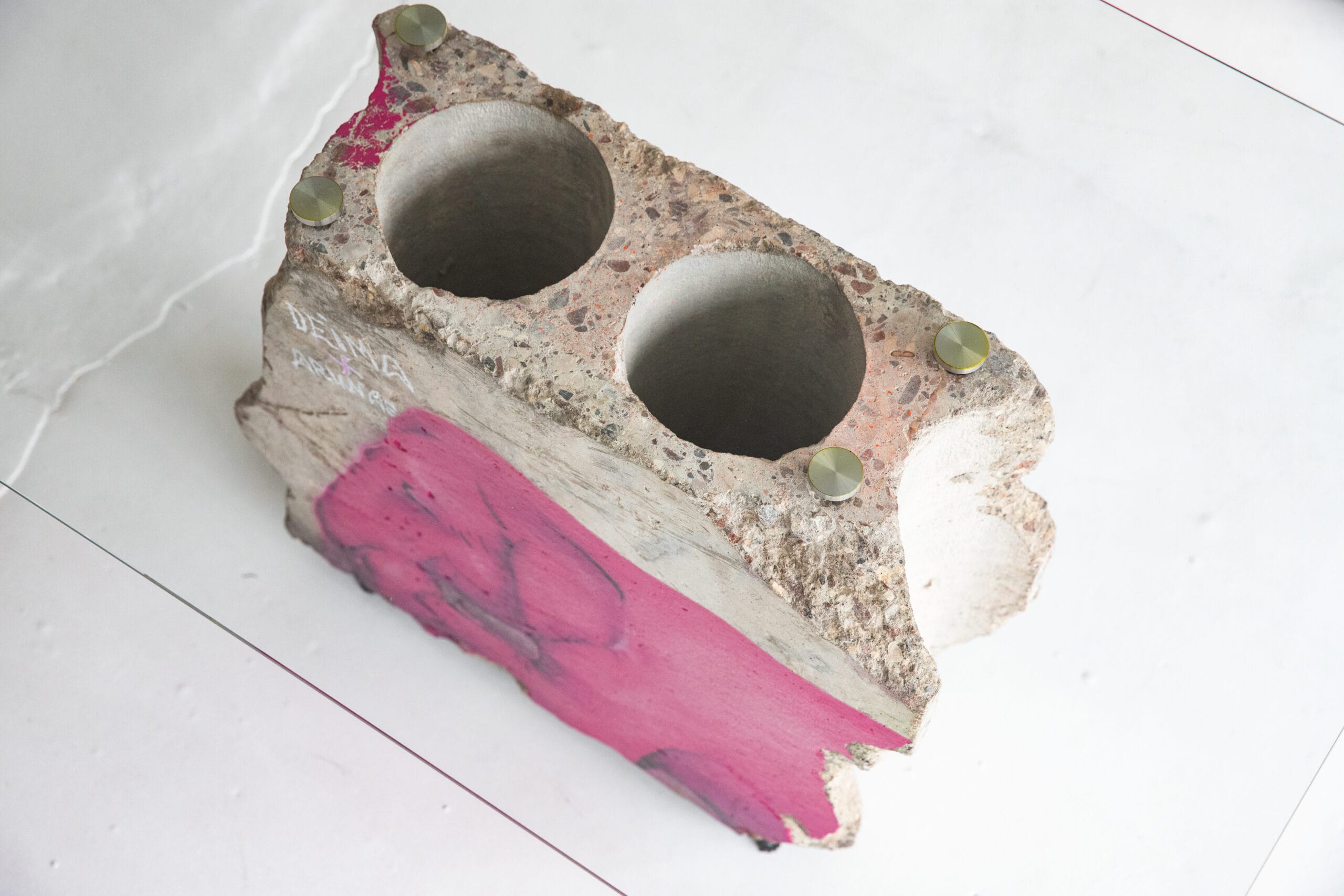
All the main elements – tables, countertops, lamps and mirrors – are nothing more than urban artifacts.
They physically bring local culture into the space.
The aesthetics of the space are based on brutality and truth.
.
Imperfect surfaces, chipped corners, exposed edges and rough textures are not defects here.
They are deliberately left out information about process and transformation.
.
This creates a necessary tension with the sterile environment and gives the space character.
HOW SPACE WORKS IN PRACTICE
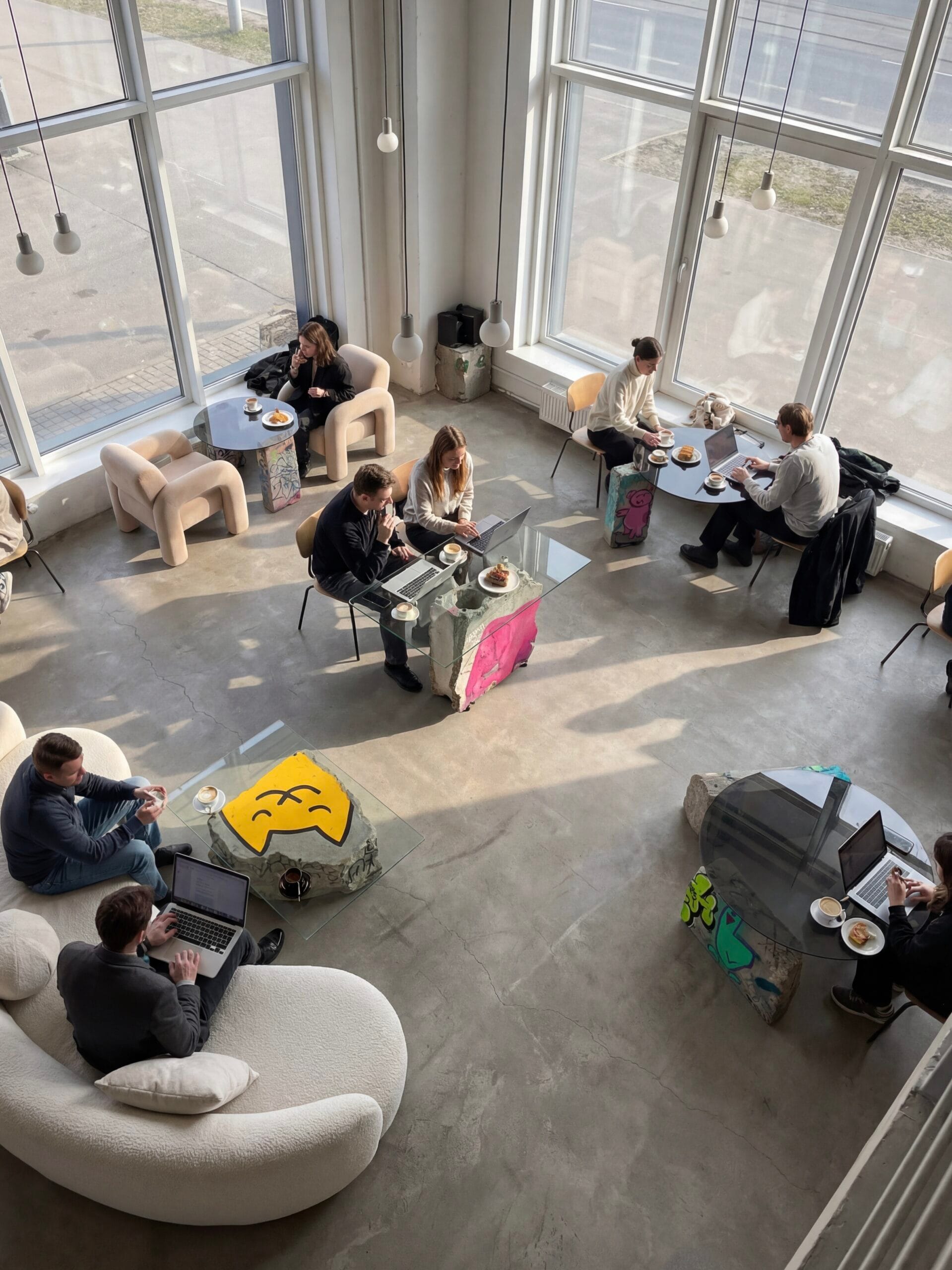
The human experience here begins not with reading the menu, but with the sense of form and texture. The first contact is visual and physical: the table surface is not neutral, the shape is not standard, and the material is not hidden under a cheap finish. It forces the person to slow down, look around, touch.
The visitor sits down not at an ordinary piece of serial furniture, but at an object with weight and cultural expression. This creates an experience – the authenticity of the material, the proximity of imperfection. The result? A longer stay and a completely different scenario than in typical “fast” cafes.
Raw material → object → experience → emotion → sharing → return
ECONOMIC LOGIC
This space really changes visitor behavior and business indicators:
• Residence time increases by ~20–40%.
• The “drink-and-go” flow is decreasing.
• The probability of a secondary order increases.
The logic is simple: when a person not only sits, but also explores, takes photos, scans QR codes or talks about the space – their stay time increases from 25 minutes to an hour. Financially, this changes the rules of the game. If the basic basket is ~4–5 €, then with a longer stay (second coffee, dessert or sandwich) the basket grows to 7–11 €. This means +40–120% basket growth for a large part of visitors. Even if only a third of guests order additionally, the overall average increases by 20–35%.
OBJECT AS MEDIA CHANNEL AND CITY MAP
.
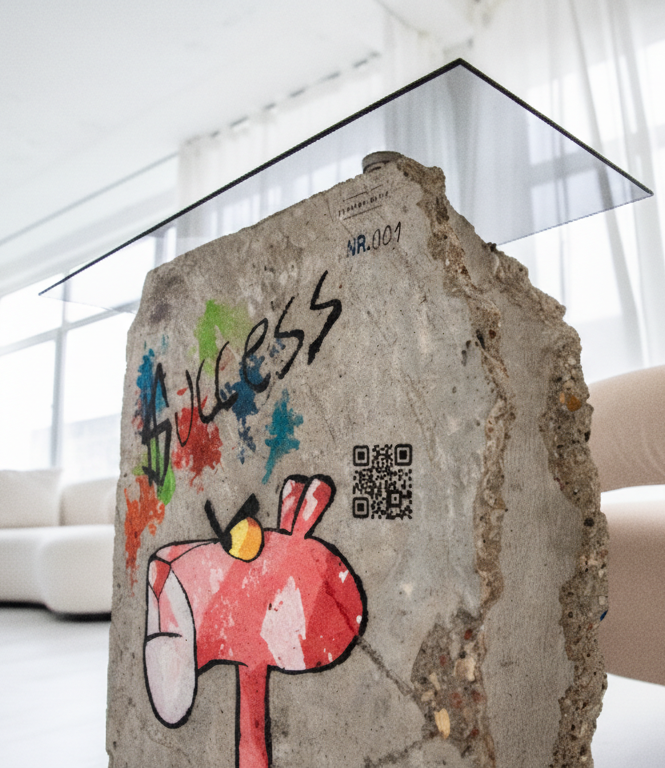
QR codes integrated on objects act as a bridge. By scanning them, the visitor learns about the origin of the raw material, the transformation process, the previous function of the form and its connection to the Kaunas context. The object becomes a carrier of history. This changes the relationship with the place: it stops being “one of the cafes” and becomes “my place”.
A point of attraction for guests from abroad and other cities
.
This space goes beyond the boundaries of a standard café – it acts as a physical “map” of the city. We notice that visitors come here not only from other Lithuanian cities, but also from abroad, driven by curiosity to see a different Kaunas. Through these objects, they read the history of the city, feel its industrial weight and understand the significance of the place without any guides. This becomes the main reason to come: people are not looking for a cup of coffee, but for a local code that they can see and understand only here.
.
This generates huge organic reach: ~10-25% of visitors scan the codes. About 5-15% of them take a picture and share it on their social networks. Assuming 100 visitors per day, this generates 3,000-8,000 organic impressions daily. This becomes an audience of 90,000-240,000 impressions per month without any advertising budget. The conversion is obvious: new visitors come to see what they saw on their screen.
.
AESTHETICS AS AN EMOTIONAL CONNECTION
In this space, aesthetics is not style. It is the result of a process: raw material → object → experience → emotion → sharing → return. The objects are not symmetrical or sterile, because they are born from real urban structures. It is the contrast between brutal and gentle, between historical and modern, that creates an emotional connection.
Imperfect forms act as human expressions. People instinctively recognize what is real. This creates comfort because the imperfect form resonates with the person themselves. As a result, people stay here longer, talk more often, and return more often.
.
FLOWERING AND LONG-TERM REPUTATION
.
The circularity of this project is not a declaration – it is a working economic mechanism.
.
Former forms have taken on new meaning, and the visitor becomes part of this cycle.
.
The circularity continues through the person: object → experience → emotion → sharing → return.
This space acts as a constant generator of reputation.
.
People recommend not the price, but the “must-see place.”
.
This reduces dependence on paid advertising and builds emotional loyalty.
.
We don’t compete on price, we compete on experience, which means less sensitivity to price changes and a longer project life.
.
PAST → PRESENT → FUTURE
.
The past is here in the material.
Objects are born from past forms, past functions, and past purposes.
This gives them soul and weight.
The present here is in the experience.
A person physically sits next to an object that has an origin, a history, and a meaning.
He sees it.
He feels it.
He photographs it.
He shares it.
The future is here in the cycle.
Every new visitor becomes the beginning of a new chain.
Every return – a stronger connection to the place.
Every sharing – a new entry point for others.
It’s a growth model based on value, not budget. Each cycle returns with gains: more people, more recognition, higher basket value.
SUMMARY: OUR OPERATING MODEL
The space is created not from design, but from reality: waste, scrap, remnants of urban industry. We explore infrastructure, analyze culture and materialize a new form.
From this comes direction. From direction comes process. From process comes new meaning. It is a cycle. It is a model that can be replicated anywhere in the world, using local materials and culture.
It shows how local materials, local stories and local expressions can be transformed into real, functioning infrastructure. We already have the land, but are we connecting…
We think globally. We act locally. We create the architectural future.
This café is a demonstration model. While the space still exists digitally, it’s not just pretty visuals. It’s a strategic simulation designed to show how real materials and the city’s history can actually change visitor behavior, increase brand value, and create a compelling reason to return.