INVISIBLE: The first exhibition – from concrete to a shift in consciousness.
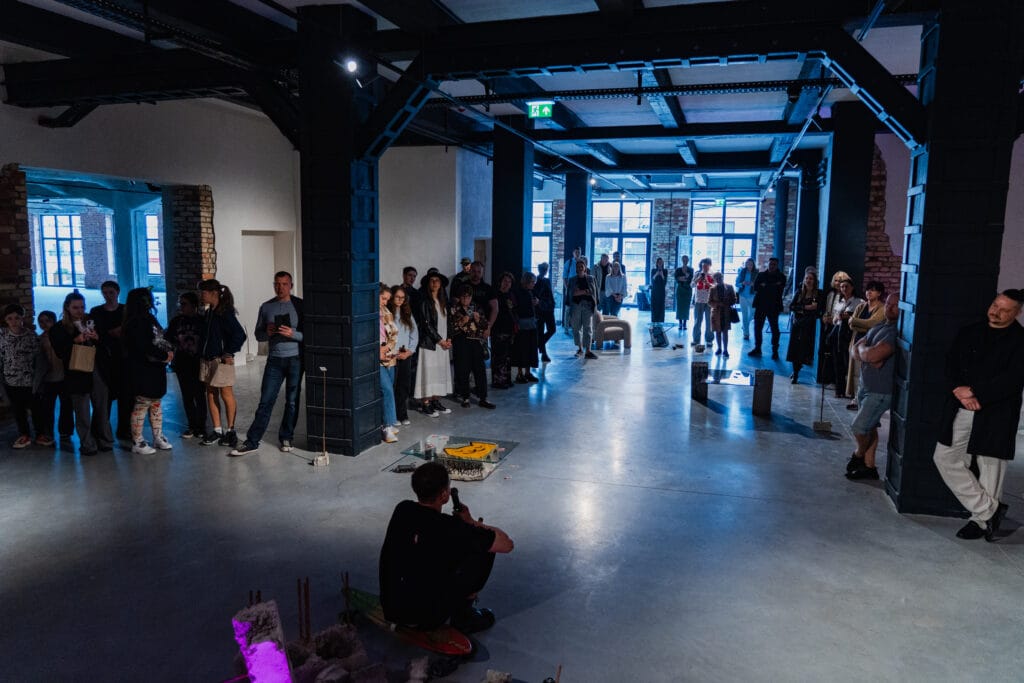
The first “INVISIBLE” exhibition took place in the former Drobė factory – a space that combines industrial heritage and creative potential. It was not just an exhibition – it was a living, multi-layered experience, where installations, sound, objects and people worked as a seamless process. I wanted to create not only an exhibition, but also a living experience of the city – where Kaunas becomes a participant in the exhibition. All the raw materials used for the exhibition – concrete rings, glass fragments, graffiti – were collected in the center of Kaunas, within a 5 km radius. Even the graffiti – layers of street art with real stories of the city – were transferred to the exhibition. These are not white walls, but a certainty that speaks, that has texture, layers and life. This exhibition breaks established models, erasing the boundaries between design, street, art and human experience.
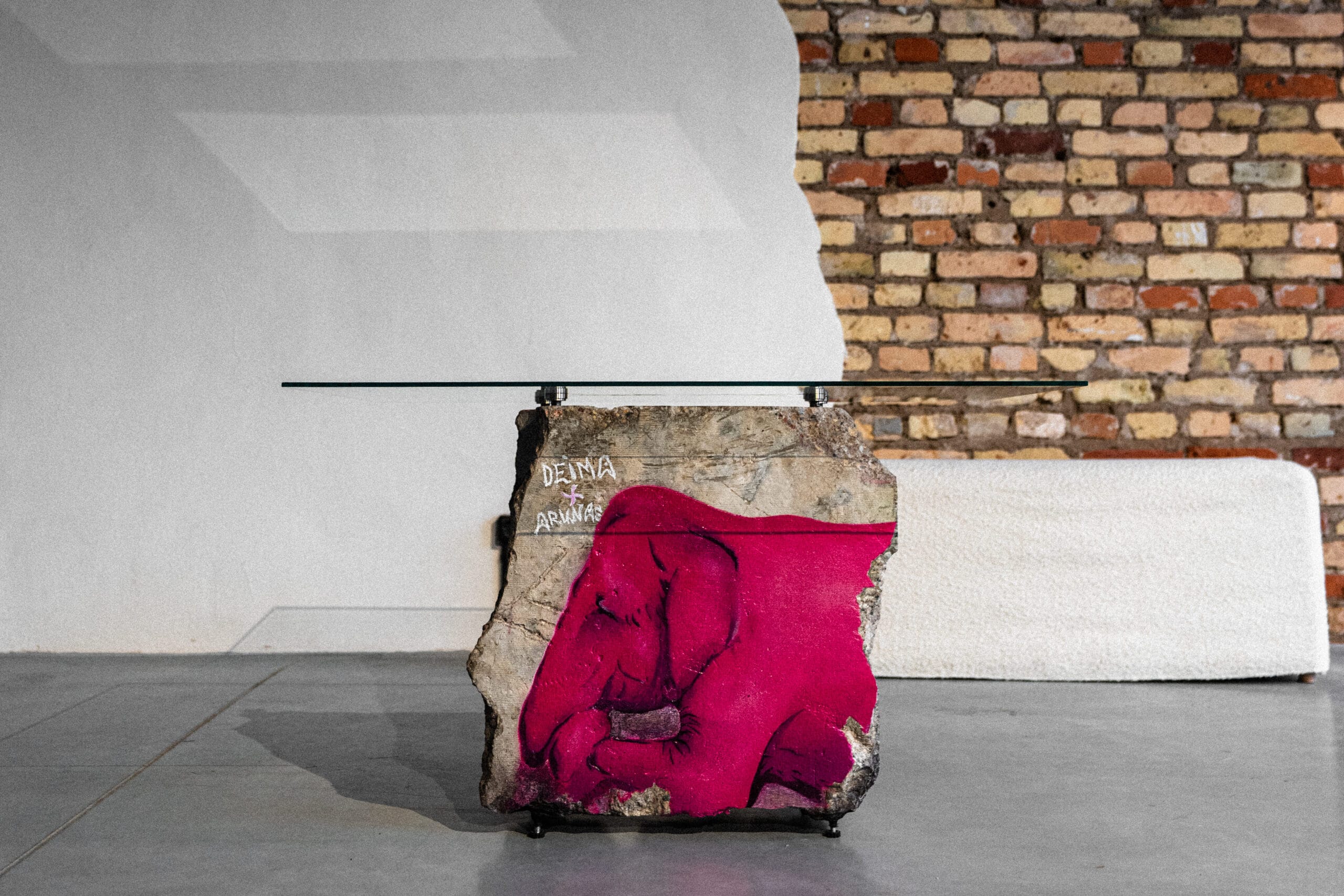
The exhibition was not created for objects to be merely observed – but for people to engage with them themselves. The concrete objects became an empty surface that invited them to leave their mark: to draw, paint, mark. It became a metaphor for action and participation – instead of observation, there was engagement, instead of a finished work, a process. I wanted people not only to see value, but to create it themselves.
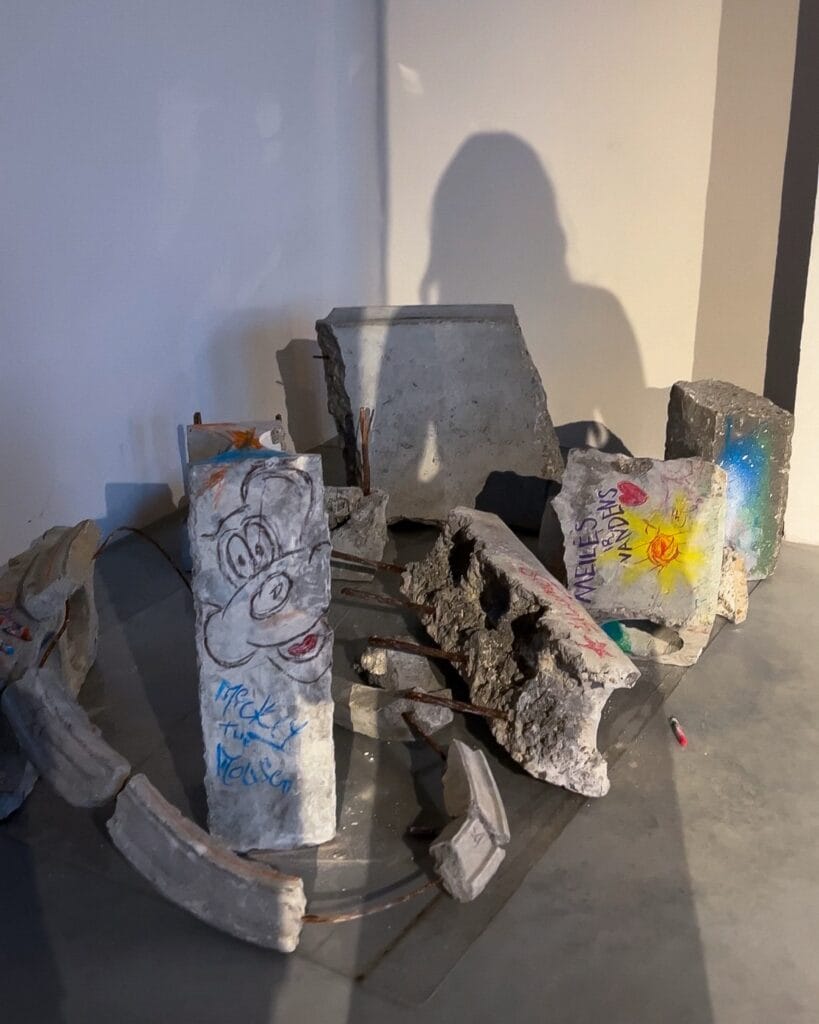
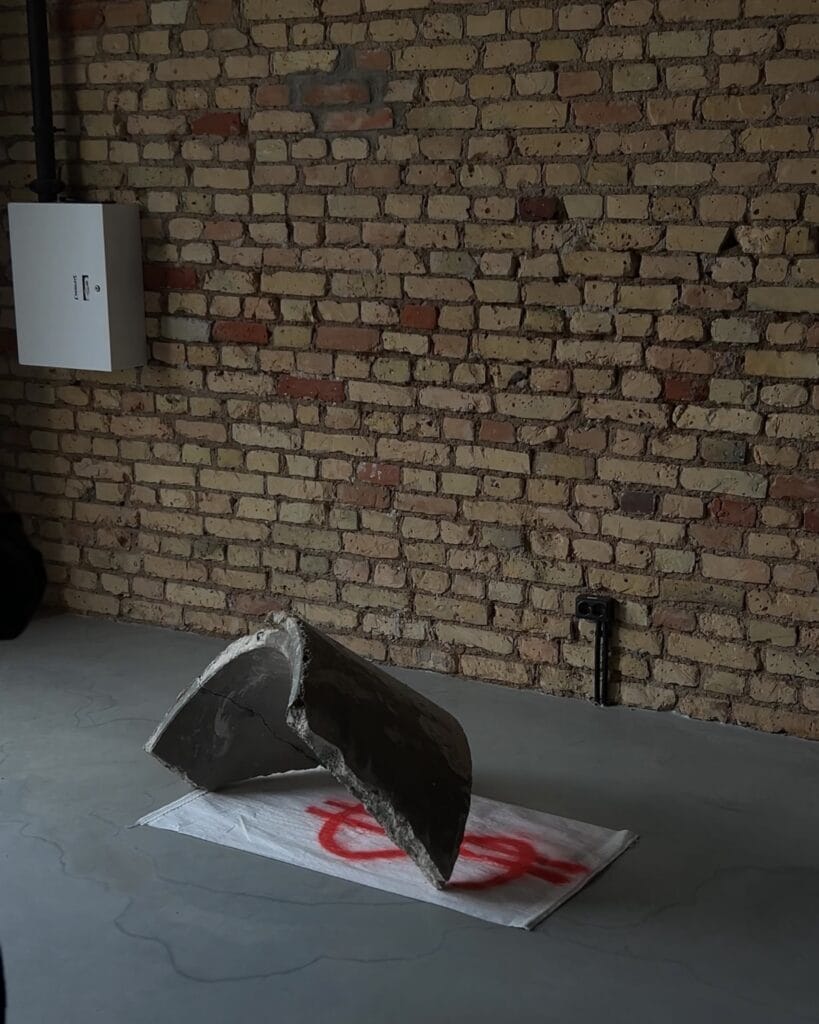
Waste, signs and the rewriting of value.
One of the symbols of the exhibition is waste bags with dollar signs, hearts, iconography. It is not only an object, but also a question: what has value today? Is it only what is shiny, or also what is left over from production? The sign of love on a waste bag changes perception – value comes from context, intention, attitude, and not from the price of the material.
Sound – between brutality and tenderness.
Techno music was played throughout the event, which was not a random choice. This is a sound manifesto: a brutal rhythm, in which lies tenderness, a strict structure that invites to move, feel, recognize oneself. This sound background awakened not only the space, but also the objects themselves – it gave them an emotional pulse.
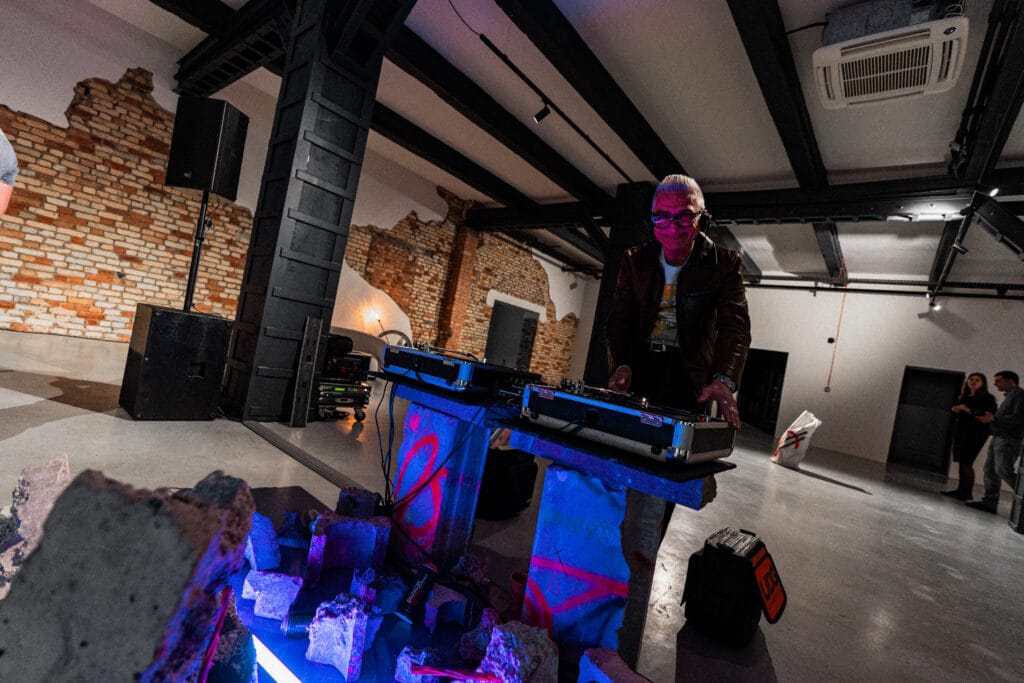
Television as a time portal.
Among the installations was an old television, which broadcast the entire production process of the project. It was not only a documentary, but also a bridge between the invisible work and the visible result. Between the idea and its physical expression. Between backstage and the stage.
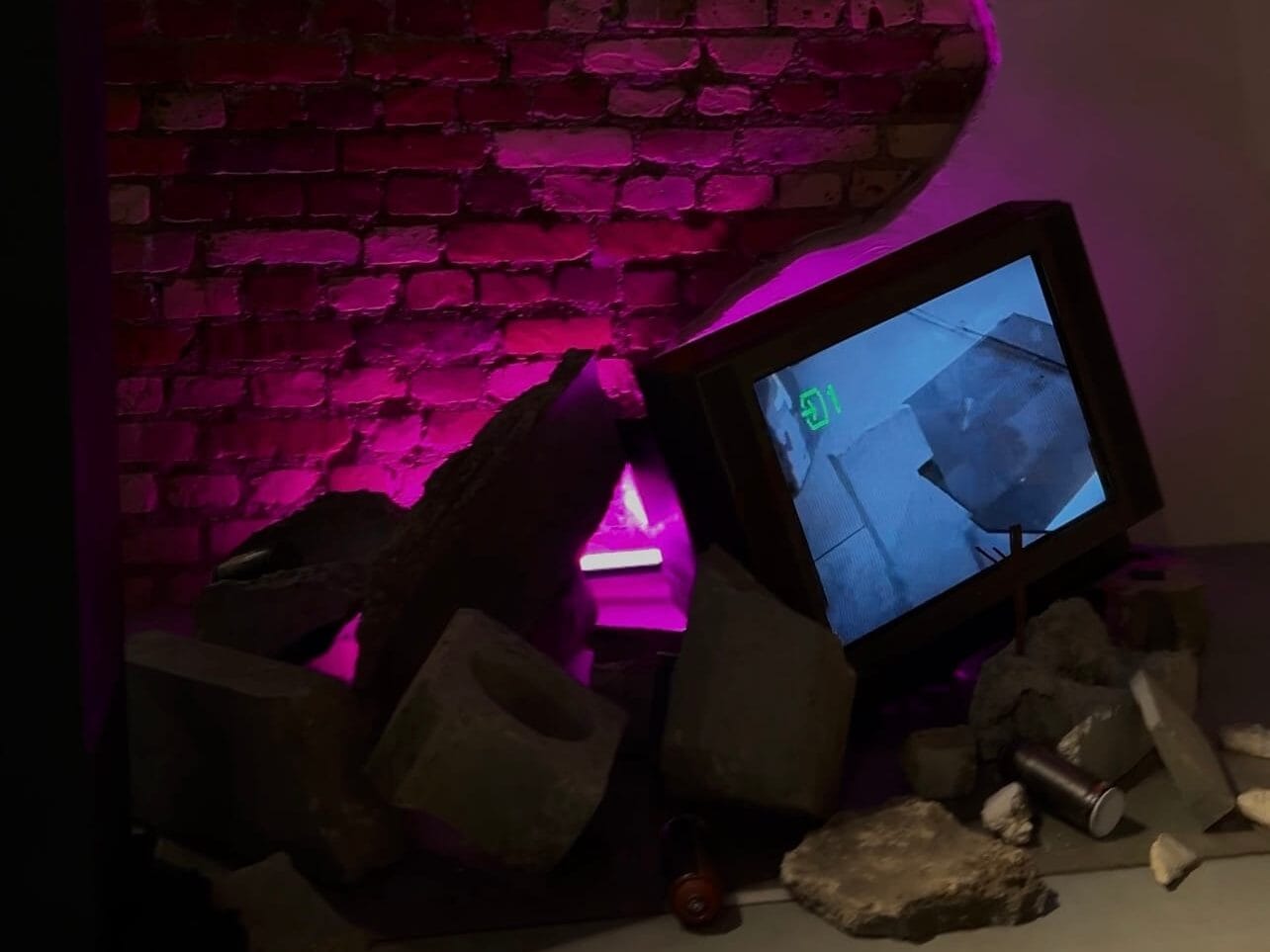
A living gift – an auction for children.
During the exhibition, a live auction began, where works were sold, and all the funds collected were donated to the Kaunas Children and Youth Employment Center. However, the main goal was not money. The goal was to show the possibility – that thousands can be lit from one candle. That aesthetics can become a social impulse.
An attitude that changes everything.
The children themselves saw that even a material that at first glance seems worthless can become valuable if the attitude changes. It liberates – from the norms of evaluation, from fear, from the “frames” of what is “beautiful” or “valuable”. Aesthetics here arise from freedom, not from rules.
This project was born from the desire to combine aesthetics and action. Not only to show, but also to implement. Not only to talk about problems, but to create systemic solutions.
A real city is real art.
I wanted this to be not an exhibition in a white gallery, but a living fragment of the city, transferred to a new context. All the raw materials – concrete, glass, graffiti – came directly from the center of Kaunas. These are the layers of the city, rewritten into an aesthetic language.
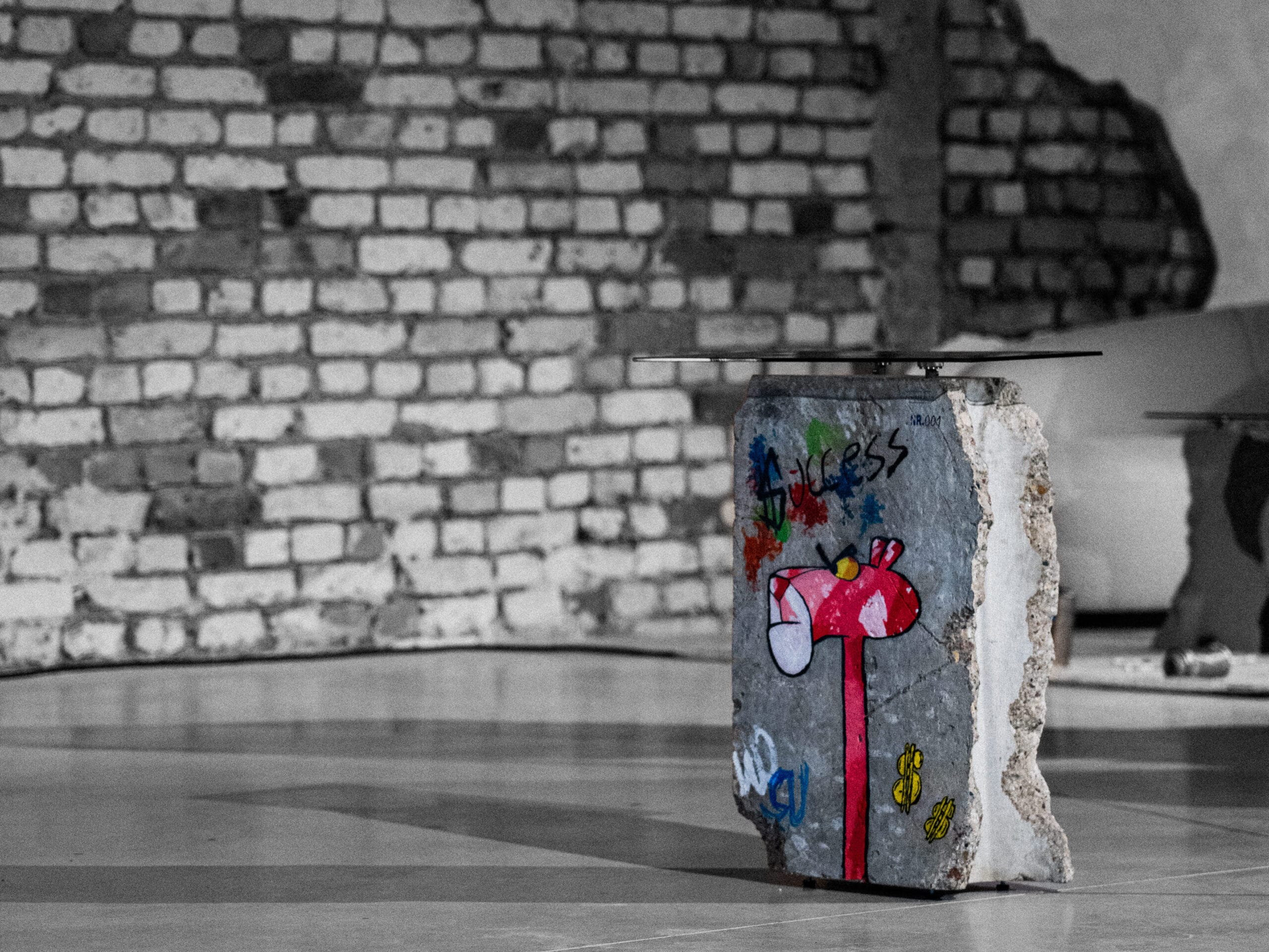
Aesthetics in action: where beauty becomes a solution.
This is not just an aesthetic experiment. It is a platform for solutions. Through aesthetics, new ways of implementing materials are discovered here, alternative value models are created. Materials are not recycled – they are reinterpreted.
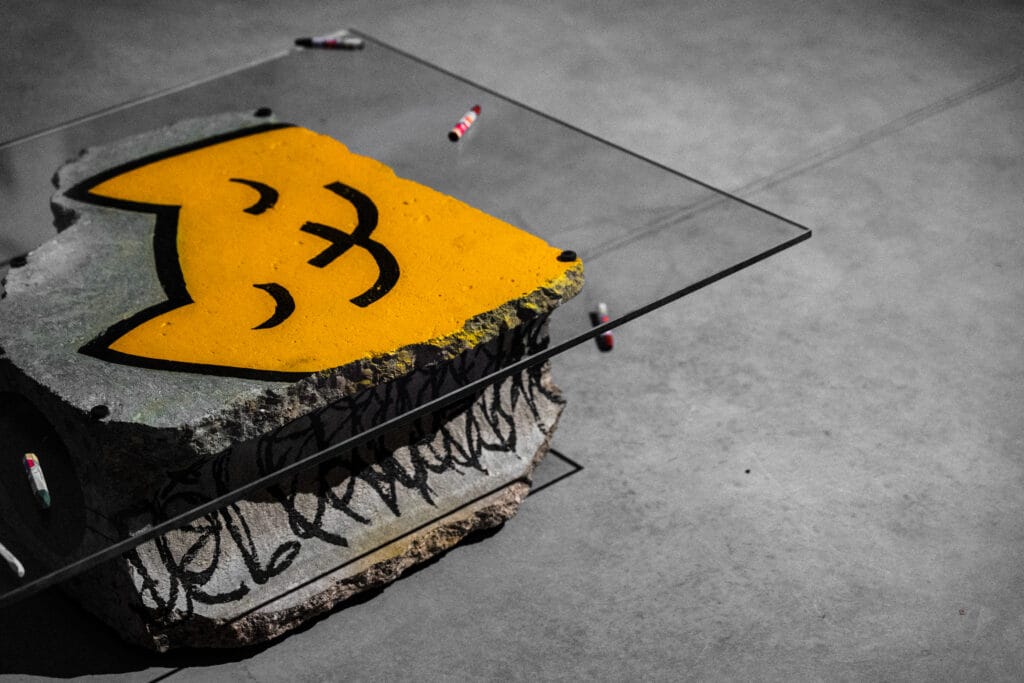
“INVISIBLE” shows that circular design can be a conscious, creative practice, not just an engineering calculation.
This is a visually articulated model of circularity, where materials are not destroyed, but acquire a new function, form and identity.
Rewriting the value chain.
The project rewrites the value chain: what was previously considered waste becomes a resource, a story, a carrier of emotional value. This is not makeup, but a method. Through aesthetics, what is invisible becomes apparent here – systemic shortcomings, but also the potential to create a new awareness.
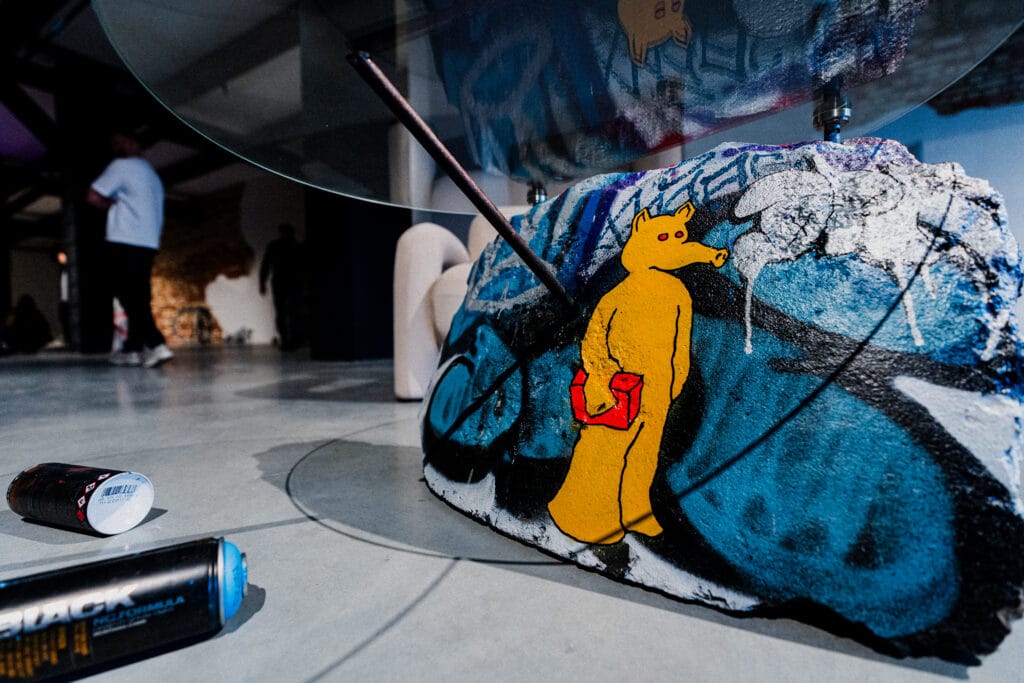
Materials connect people.
This model works not only with things – but also with people. The project connects different communities, creators, viewers, producers. Raw materials become a social bridge.
Not an exhibition – a model that works everywhere “INVISIBLE” is just the beginning. The project is already beyond the gallery. It is being developed further – in the real world, with real leftovers, real people.
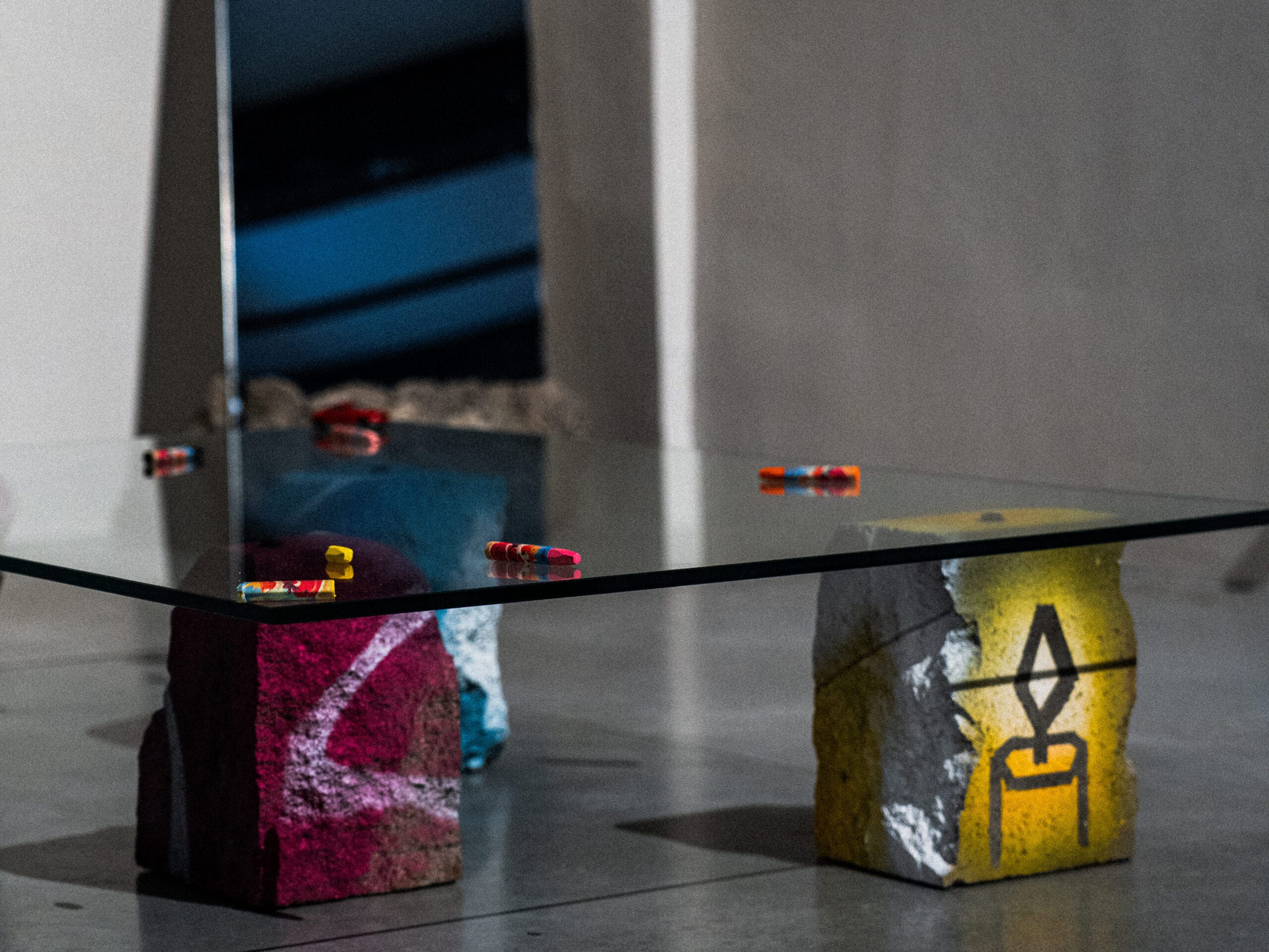
It is a working model that can be applied anywhere – because everywhere there is production, everywhere there is surplus, everywhere there is opportunity.
It is a system that transforms not only materials, but also attitudes.
When aesthetics becomes infrastructure, it is design that is not only beautiful, but also functional as a system. It is a change that arises from aesthetics, but reaches the economy, education, communities.
“INVISIBLE” is not only about materials. It is about the question they raise. About the transformation of value
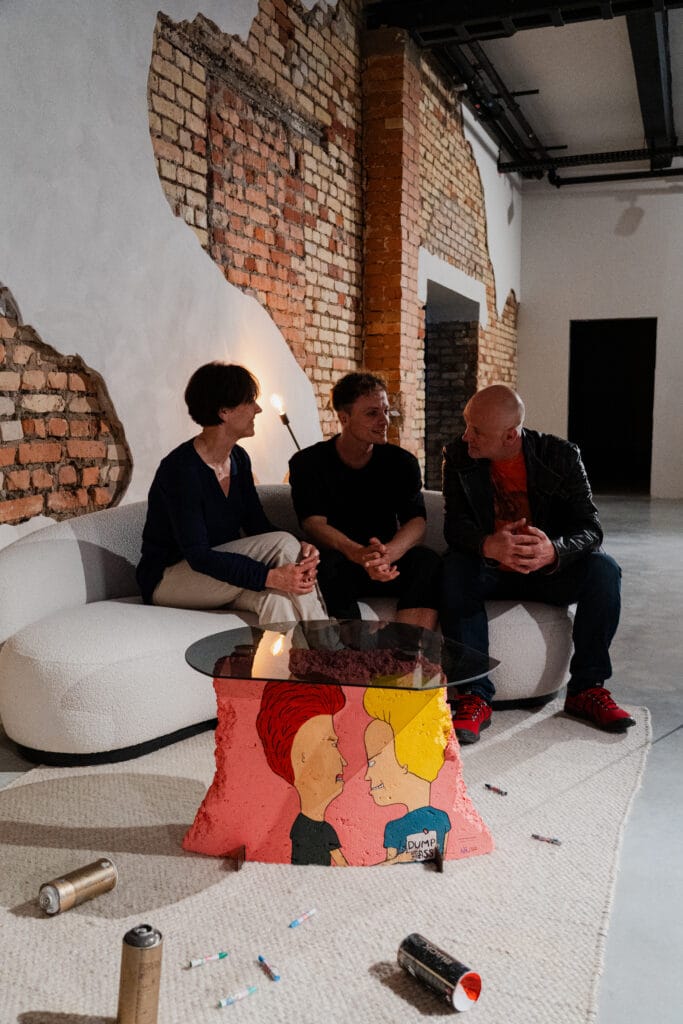
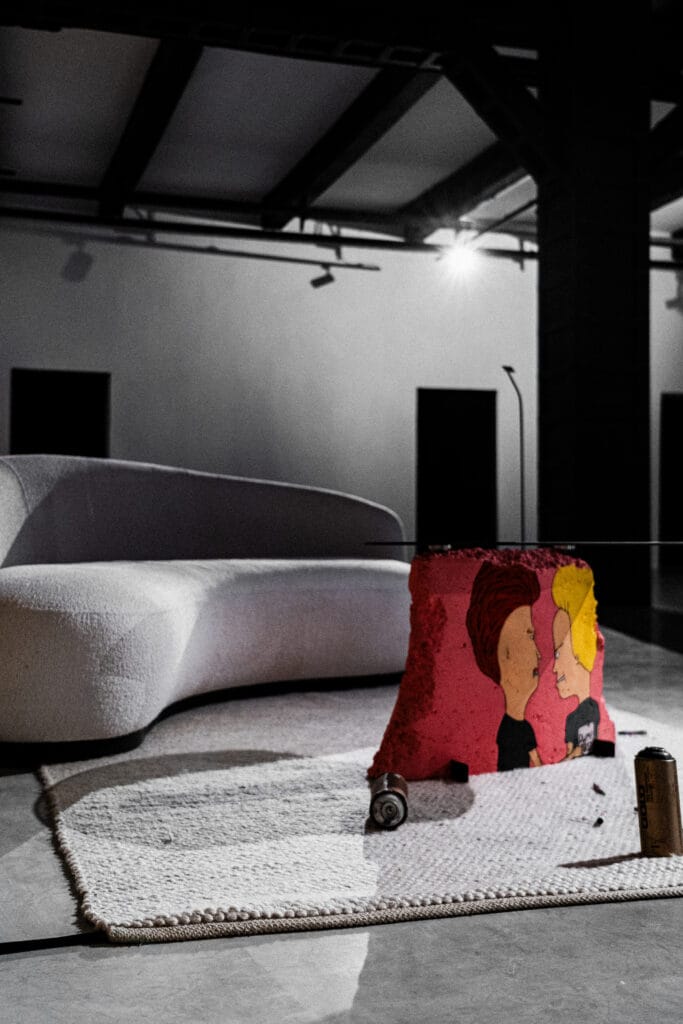
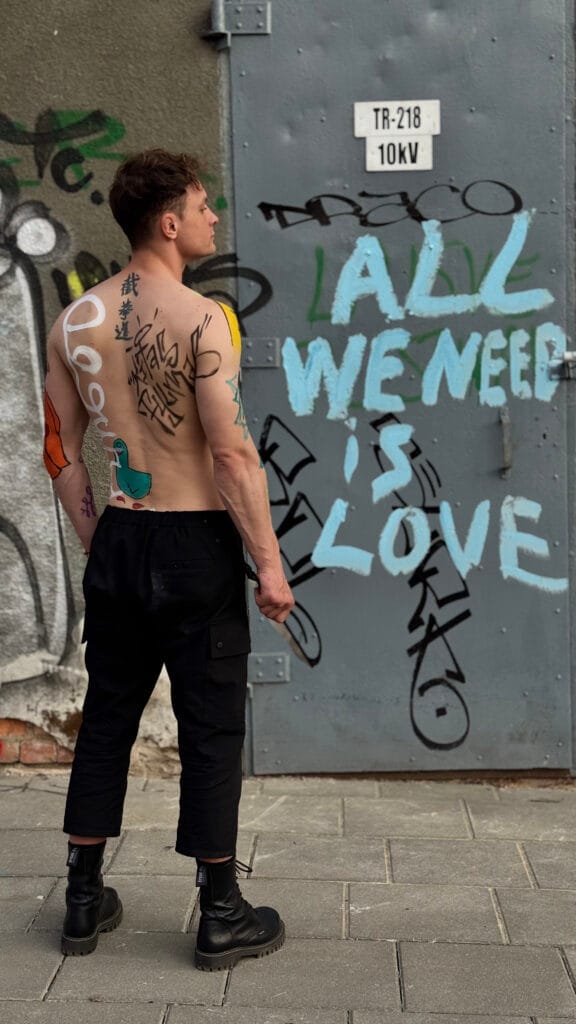
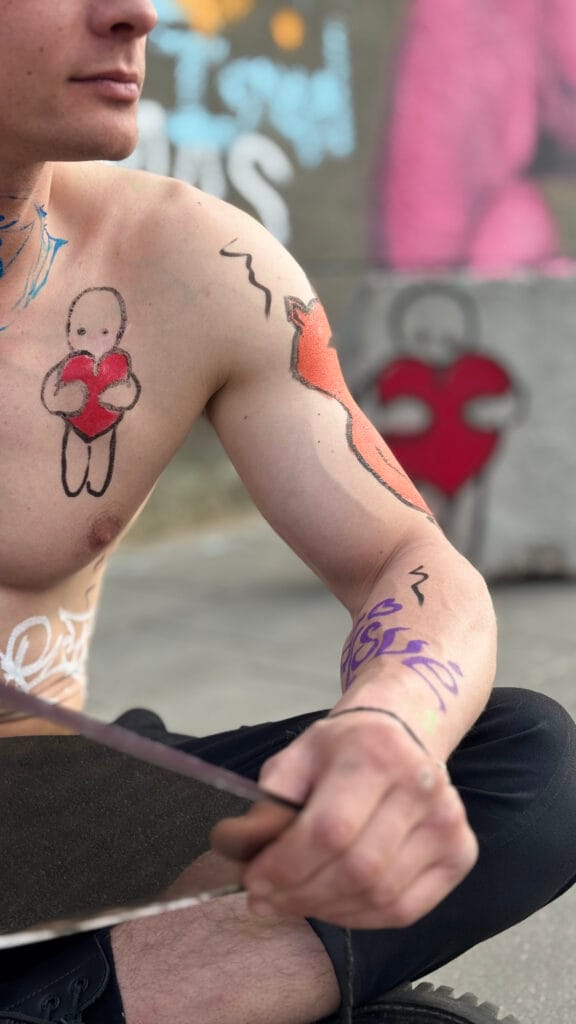
Why did graffiti appear on my body?
It was not a random aesthetic gesture. I decided to draw graffiti signs that were also on the exhibition objects because I wanted to show that I am no different from it. Those signs are the language of the city, the real surfaces of Kaunas, transferred to the works, and finally to the body.
For me, it meant more than a decorative symbol. It is an identification with the project, with its message, with the material itself. What was on the concrete became me. In this way, the project becomes not only created by me, but also alive through me.
It is a unified system where the material passes into feeling, into the body, into consciousness. Drawing is not a separate form. It is a record of experience, a sign that aesthetics can be deep, that it can connect, transform, change even ourselves.
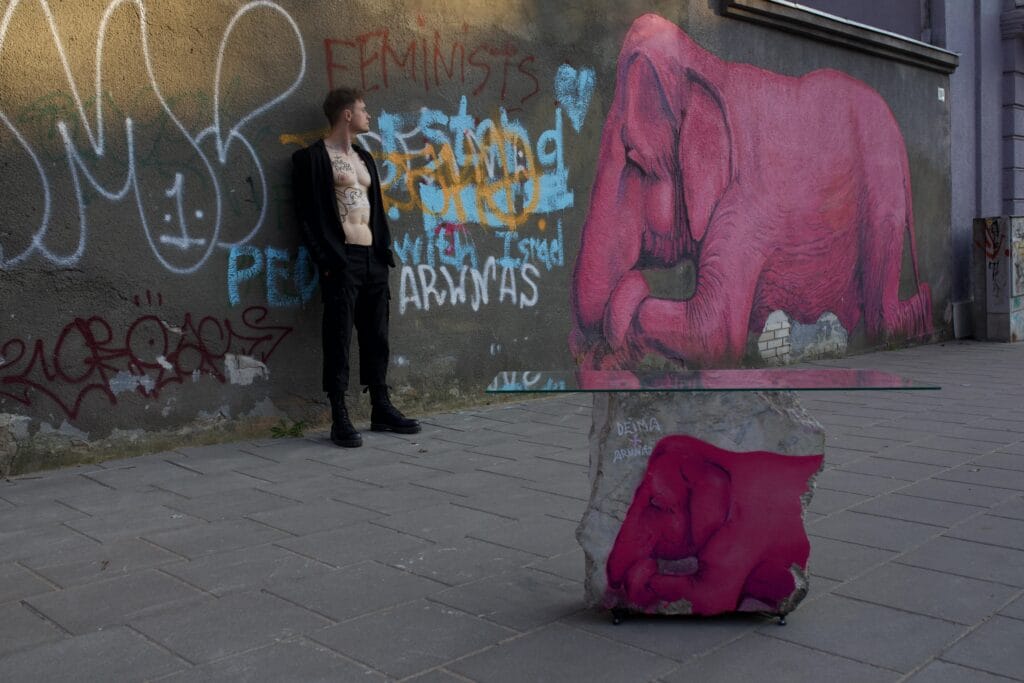
I didn’t just want to show the works – I wanted to be in the process, to be fully involved. So that beauty wouldn’t be a surface – but an internal relationship with what I was doing.